


26 May 2026


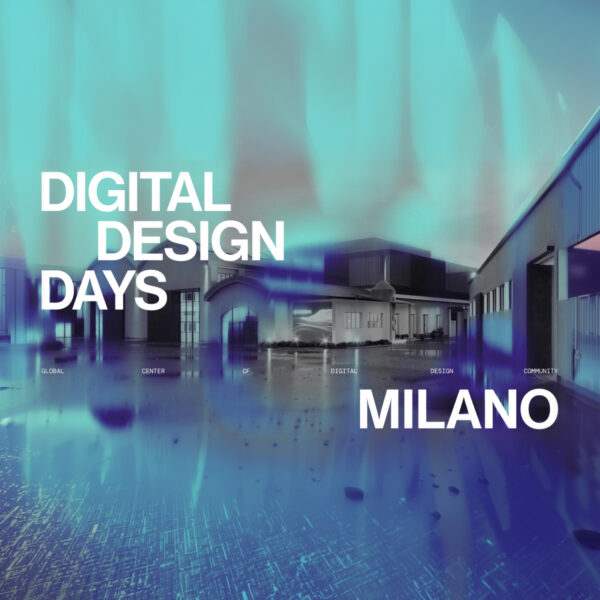
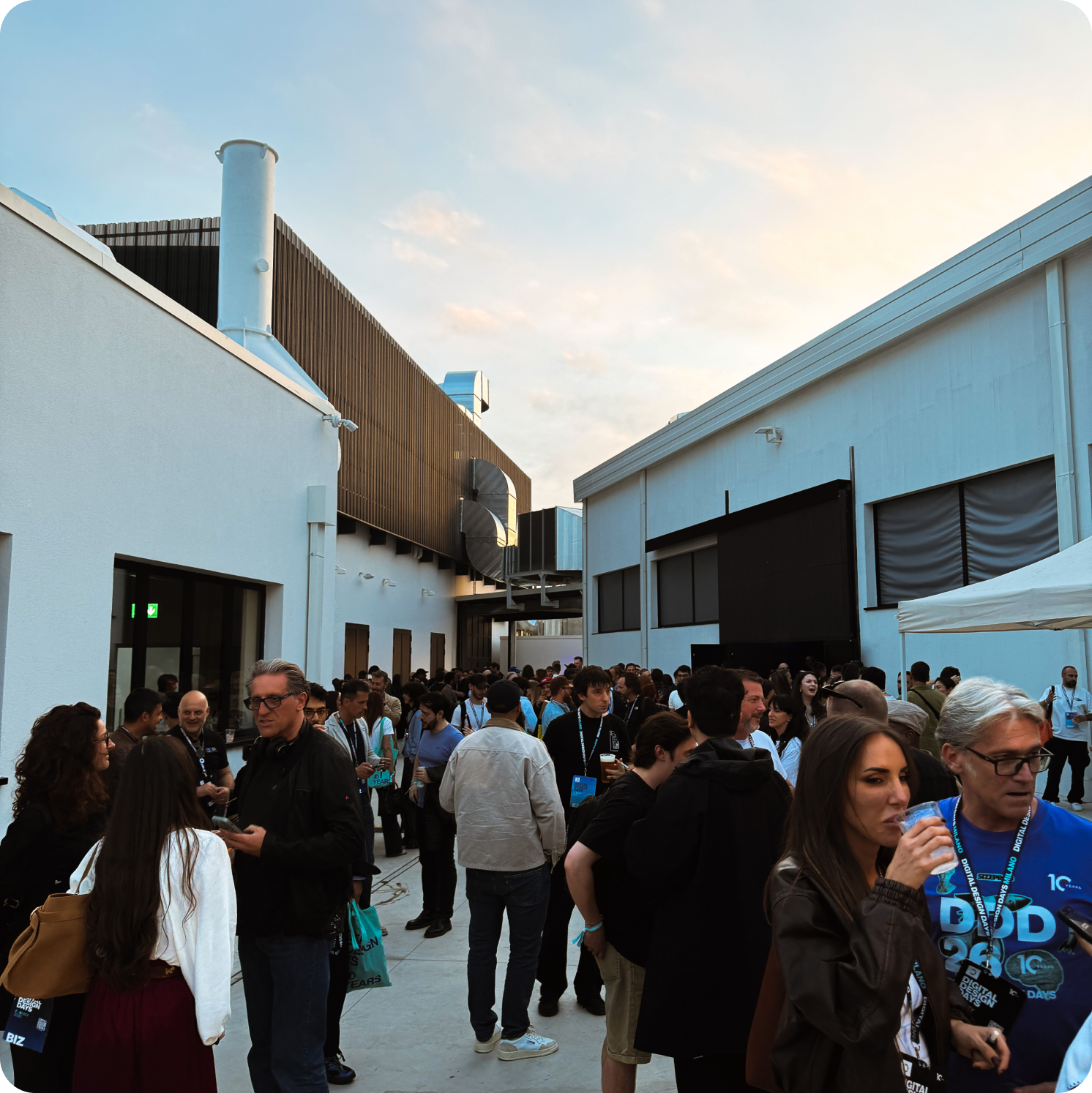
Leon and I spent three days at Digital Design Days in Milan, and we’ve come back with full notebooks, a sharpened point of view, and an inconvenient number of opinions about what was the best spritz, Hugo or Aperol?
What follows is a day-by-day account of what stuck, the talks, the moments, and what we think it means for our design team and for Atomic as a consultancy.
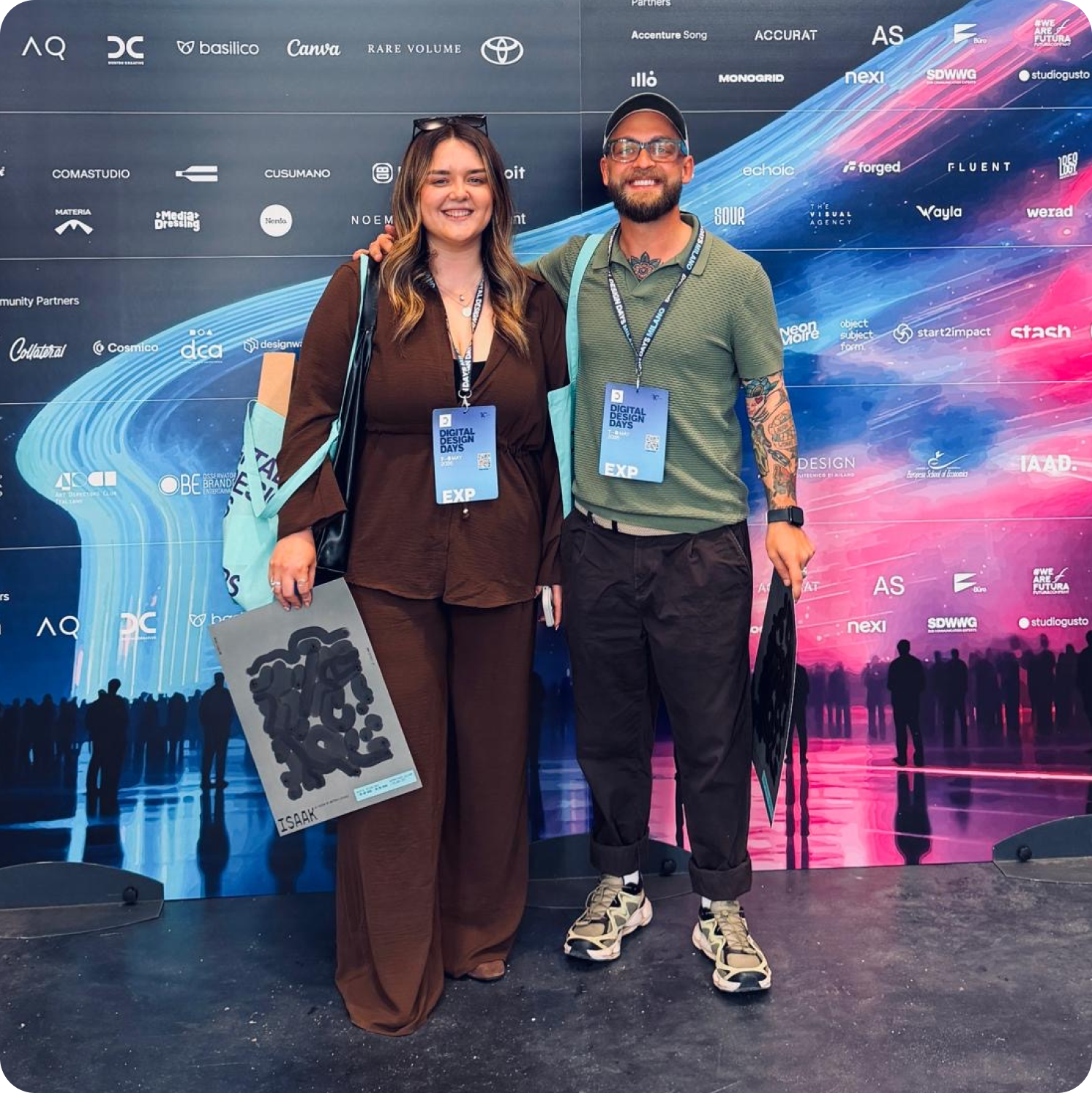
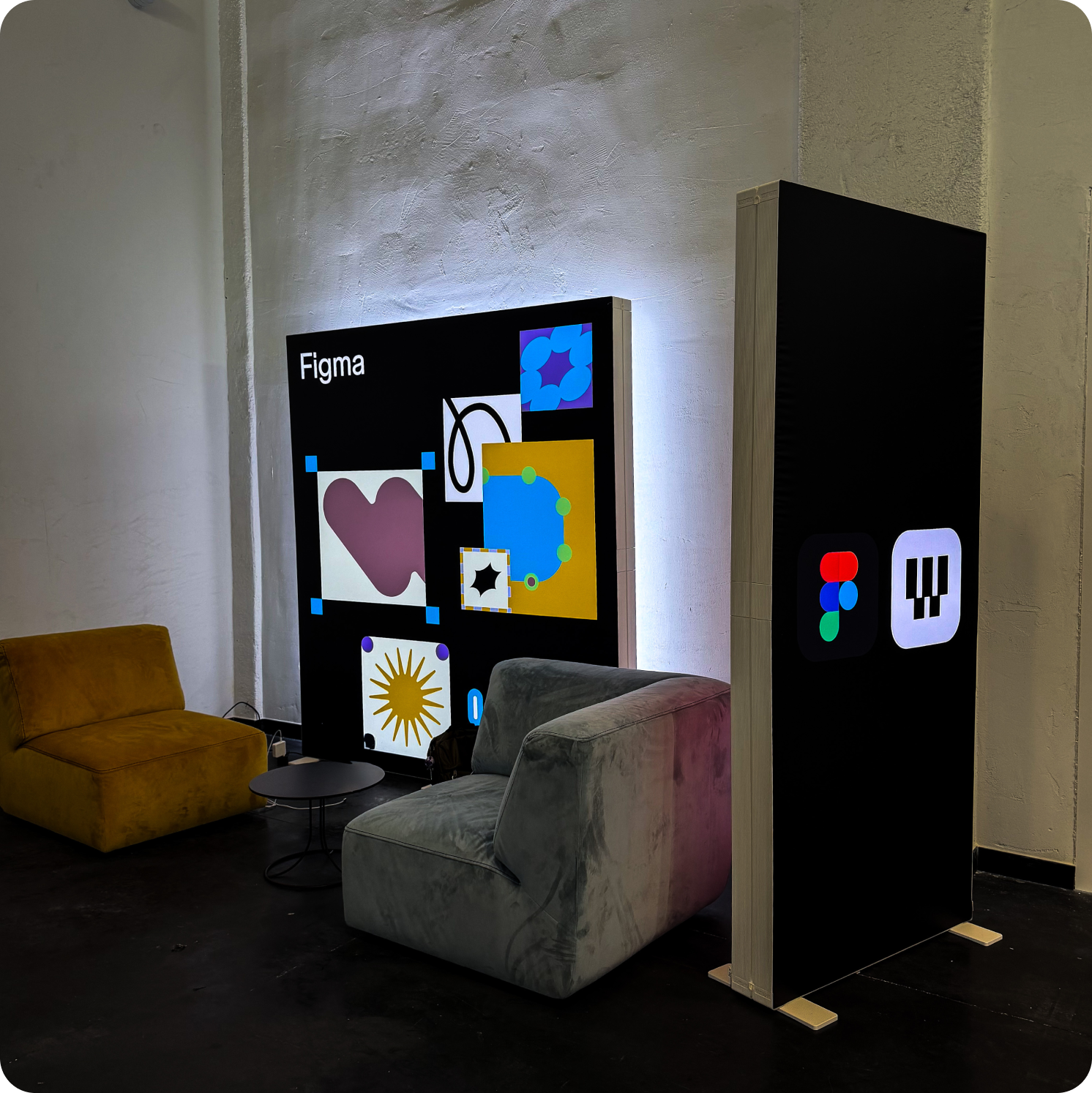
If there was a theme to day one, it was the quiet, slightly uncomfortable acknowledgement that the role of the designer is shifting underneath us, and the people who’ll thrive are the ones leaning into it.
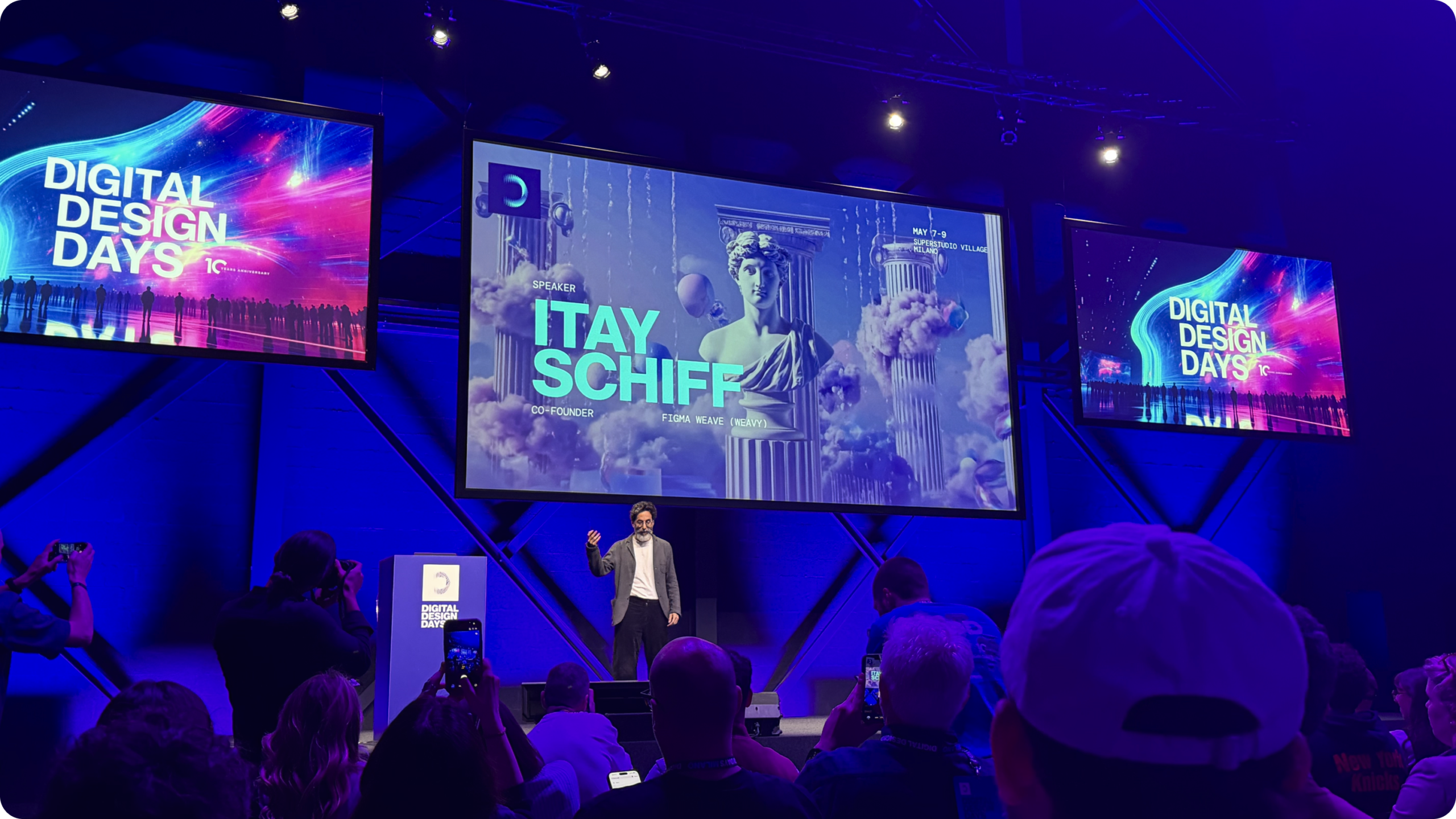
Itay Schiff from Figma Weave kicked things off with a reframe that felt overdue: the designer as curator rather than creator. In a world where generating things is increasingly trivial, the craft moves upstream, into taste, judgment, and knowing what to keep, push, or kill. He showed how Figma Weave fits into existing workflows to support that, rather than replacing the thinking with a generator.
Leon put it well over coffee afterwards: “It’s not that the craft is gone, it’s that it’s moved. The hard part used to be making the thing. Now the hard part is choosing the right thing to make.”
Daan Klaver from Build in Amsterdam followed with a talk on consistency that managed to make a famously dry topic feel urgent. His underlying point: consistency is what allows trust to compound. Without it, even beautiful work starts to feel unreliable.
Gabriele Rossi from Accurat then made the most provocative argument of the day. When AI can generate code, visuals and prototypes on demand, the value of a designer isn’t in the artefact, it’s in the clarity of construction. Static deliverables decay the moment they’re finished. The shift from maker to conductor is where the real opportunity sits. “Stop selling hours, start selling judgment” was the line that landed for both of us.
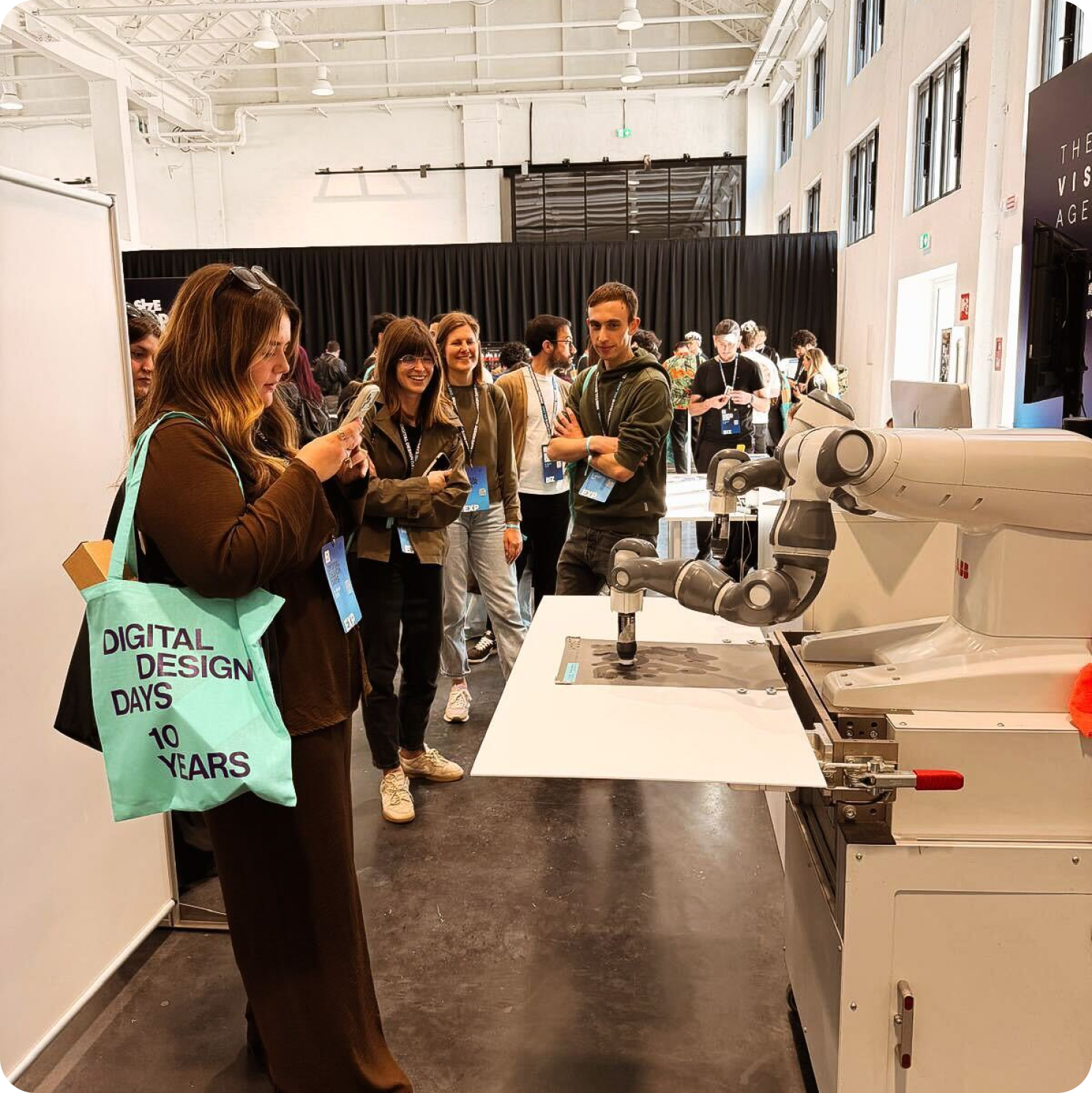
Claudio Gasparollo and Irene Costantini from Ditroit brought the day’s most joyful energy. Their argument: protect space for personal projects and unbriefed experimentation, or your work starts going “musty”, a perfect description for something every creative has felt at some point. They also brought ISAAK, a collaborative robot that sketches an abstracted portrait of you in real time, on paper, with its own hands. Not a reproduction, an interpretation. A genuinely lovely thing to witness.
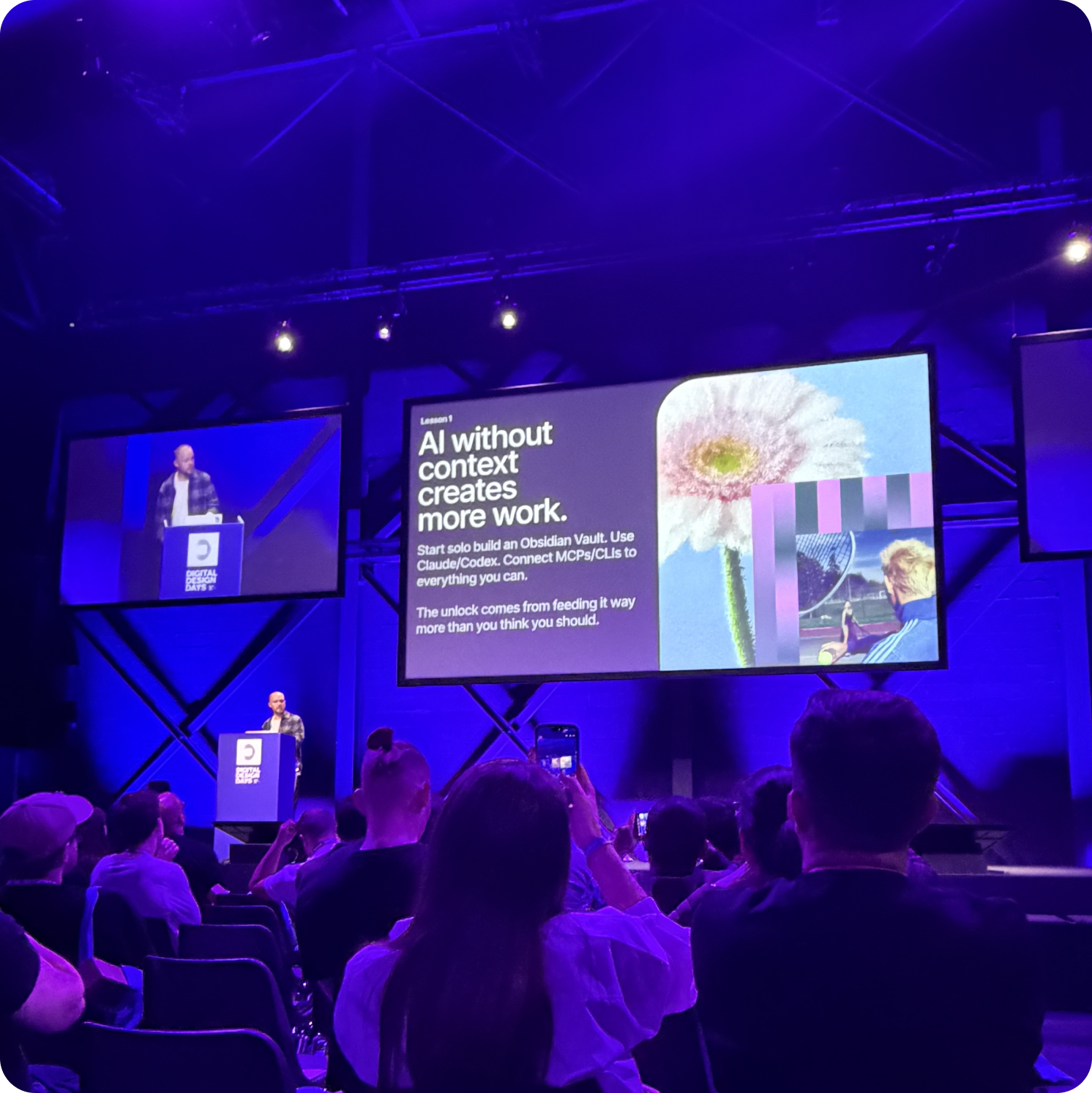
Philip Maggs from Superside closed the day with the Brand Brain, a living system that captures not just brand guidelines but the thousand small judgement calls that actually define what on-brand means in practice. Leon noted, “Every brand guidelines PDF I’ve ever opened goes out of date the moment it’s published. This actually addresses why.”
For our design team:
For Atomic as a consultancy:
Day two was the day craft fought back.
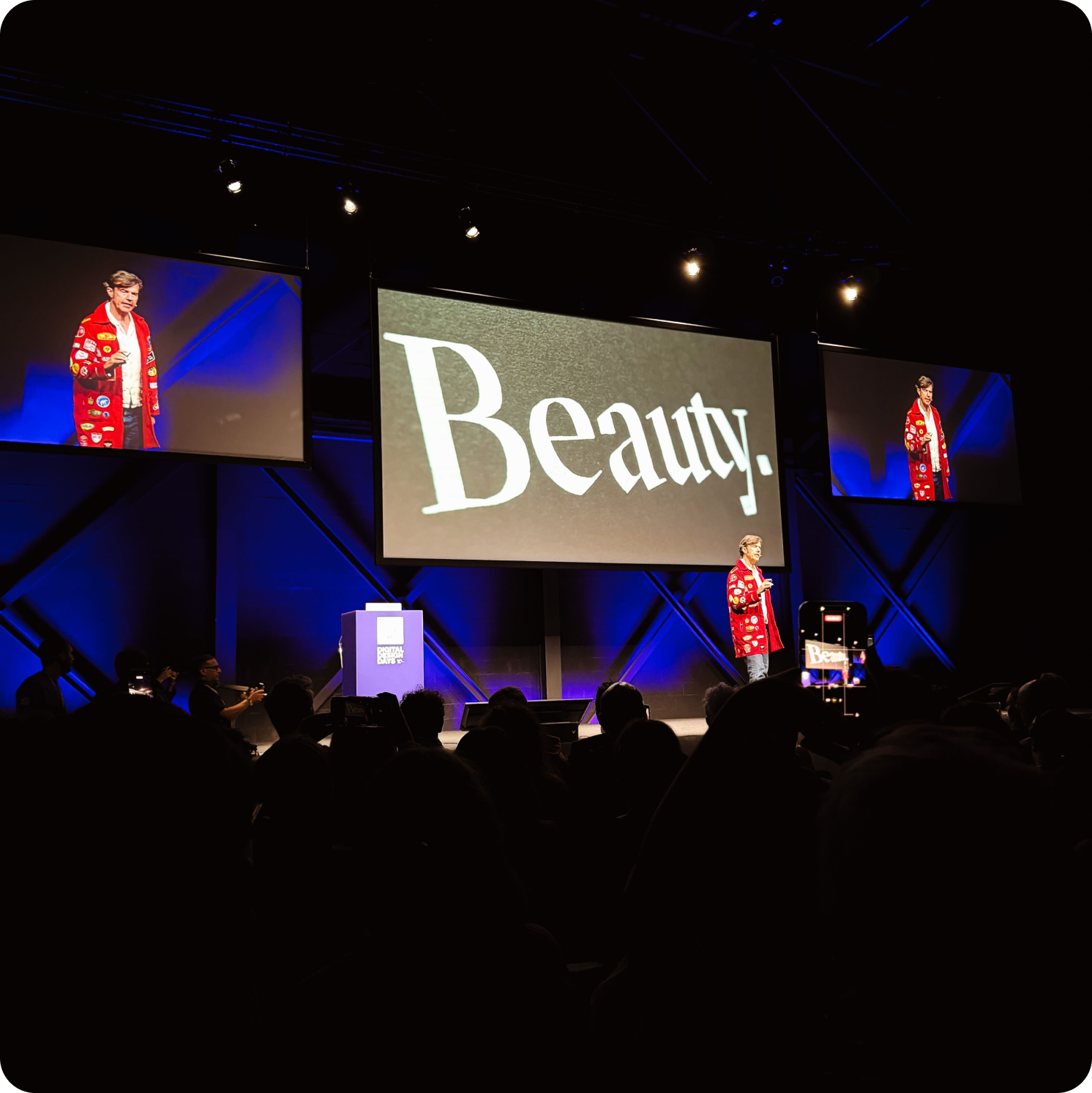
Stefan Sagmeister from Sagmeister & Walsh opened with a keynote we’d both been buzzing for since the schedule dropped. His work shaped a huge chunk of Leon’s dissertation, and his New York studio was somewhere he once tried (and spectacularly failed) to land a placement at. Seeing him in person did not disappoint either of us.
His argument: beauty isn’t decoration. It’s a functional property of design that genuinely moves people, shapes decisions, and improves wellbeing. When work is truly beautiful, it doesn’t need explaining, it lands. I left that keynote remembering why I got into design in the first place.
Mason Nicoll from Digital Kitchen was, honestly, one of the best presenters either of us has seen in long time. Emmy-winning work spanning Harry Potter: Visions of Magic, HBO’s Westworld, and pieces in MoMA’s permanent collection. What made it special was the how: vintage radioactive lenses, hand-painted techniques, decisions rooted in craft and narrative rather than trend. Work that feels human-made because it is.
Clive K. Lavery gave the bravest talk of the conference, The 7 Habits of Highly Depressive Designers. Lived experience with depression, an unflinching look at the patterns that burn creative people out, and a reminder that the culture you build around the work matters as much as the work itself.
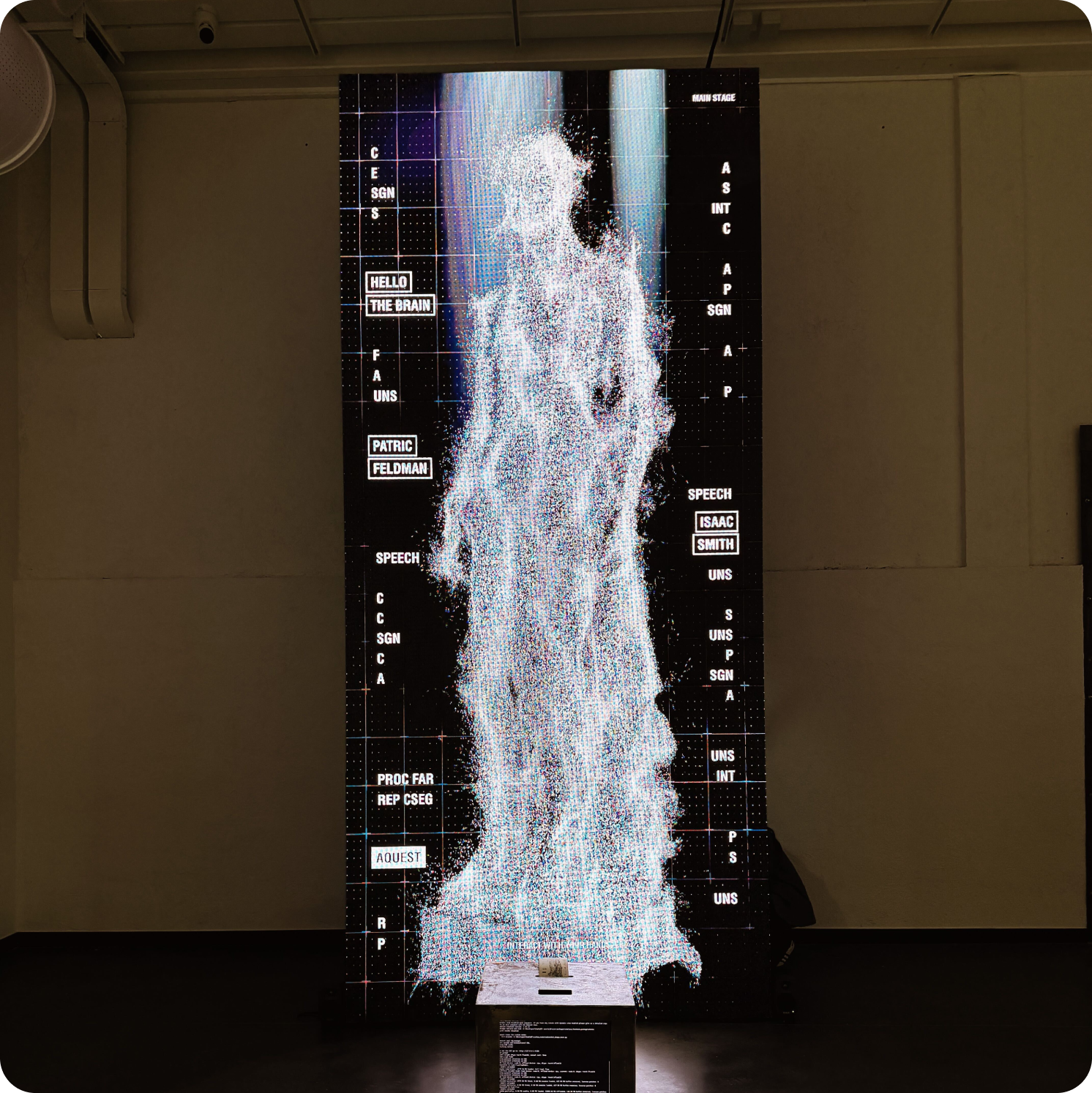
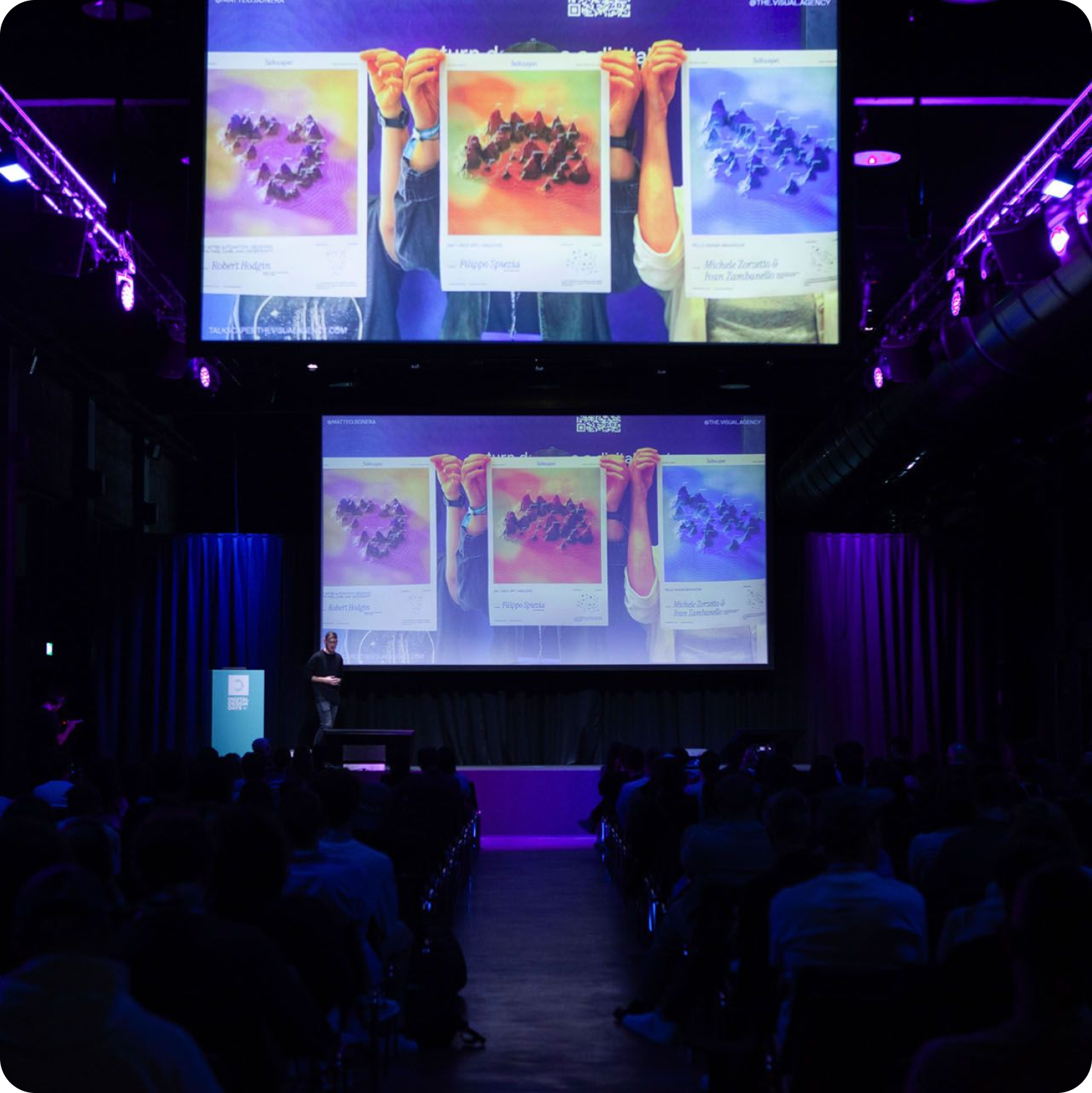
The day closed with an installation from The Visual Agency called What if a talk left a visible trace? Speech, connections and reactions captured in real time and translated into a generative poster as the day unfolded. Language into data, data into form. Every poster unique. Quietly, one of the most beautiful things at the whole event.
For our design team:
For Atomic as a consultancy:
The final day pulled the threads together.
Marina Willer from Pentagram made a confident case that, in the age of AI, human insight is more valuable than ever, not less. Drawing on her work for Rolls-Royce, Tate, Amnesty International, and her filmmaking (Red Trees premiered at Cannes), she argued that creativity is a mindset of experimentation. Technology generates options; only creativity decides which ones are worth pursuing. “Crossing disciplines keeps the work fresh,” she said, and you could feel a room full of designers quietly resolving to take up something new on Monday morning.
Dilshan Arukatti from Immersive Garden spoke from the studio-owner trenches: how to build something that creates real impact without chasing trends. His work for Louis Vuitton, Cartier, Audemars Piguet and Dior is the proof point. His framing, lasting value over temporary noise, felt directly relevant to where Atomic is heading.
Valeria Moreiro from Not Real closed it out for us. Her definition of creativity wasn’t about beautiful art or trend-chasing, it was about mixing ideas, references and disciplines, taking thoughtful risks, and building meaningful solutions inside the real constraints of briefs, budgets and time. “Creativity is born from limitation,” she said. Problems aren’t interruptions, they’re part of the creative act.
As Leon summed it up on the walk back: “The constraints aren’t getting in the way of the work. They are the work.”
For our design team:
For Atomic as a consultancy:
Across three days, fifteen-plus talks and one quietly brilliant generative poster, the same point kept surfacing: AI isn’t replacing designers, it’s redistributing where the value sits. The artefact is no longer the prize. Taste, judgement, craft, beauty, consistency, culture and clarity are.
The studios and consultancies that thrive over the next few years will be the ones that lean into that shift rather than resisting it. That’s the bet Atomic is making, and three days in Milan only made us more sure of it.
Plus, the pizza, pasta and of course the Aperol spritz were excellent. Worth the trip on its own merits.