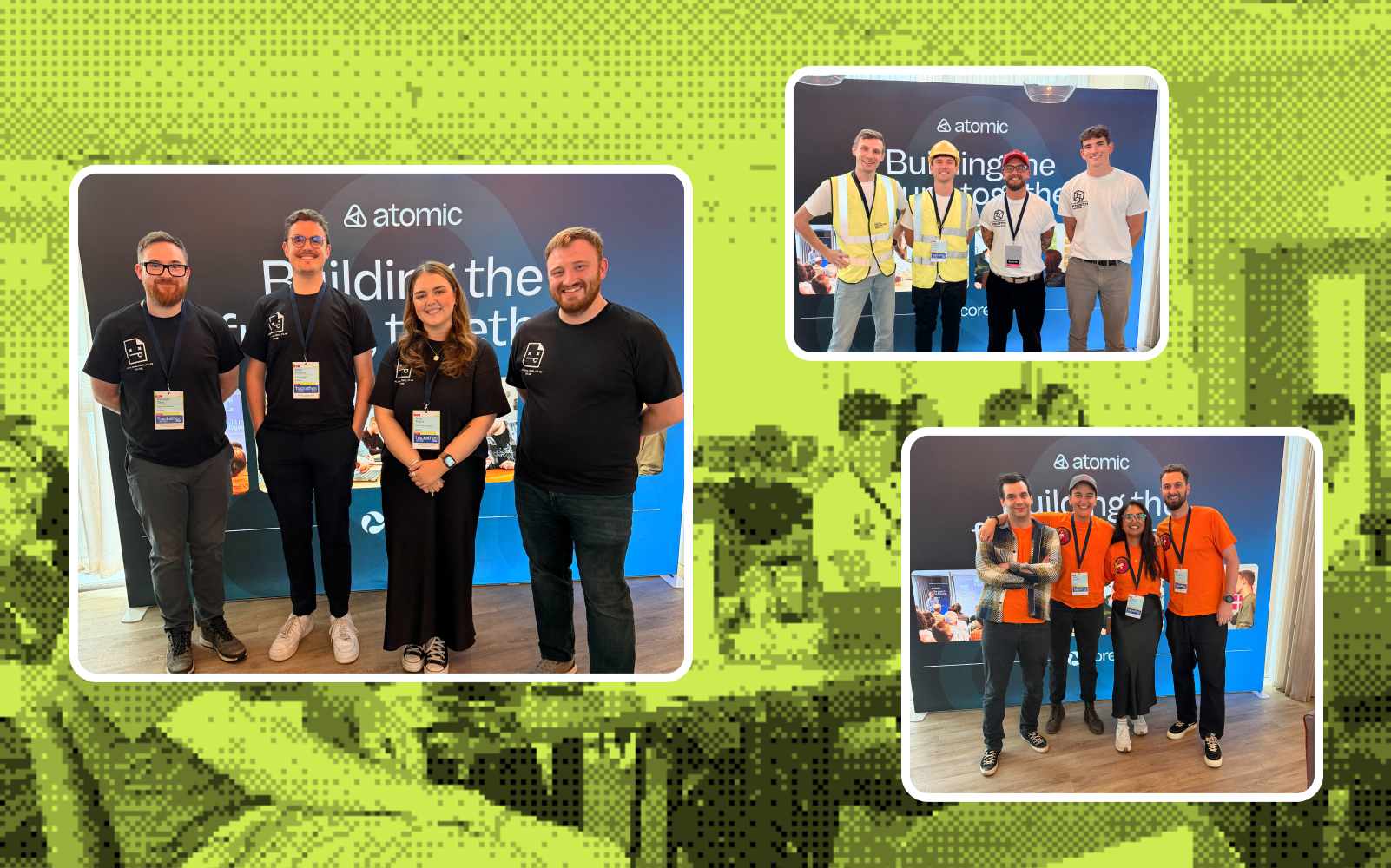
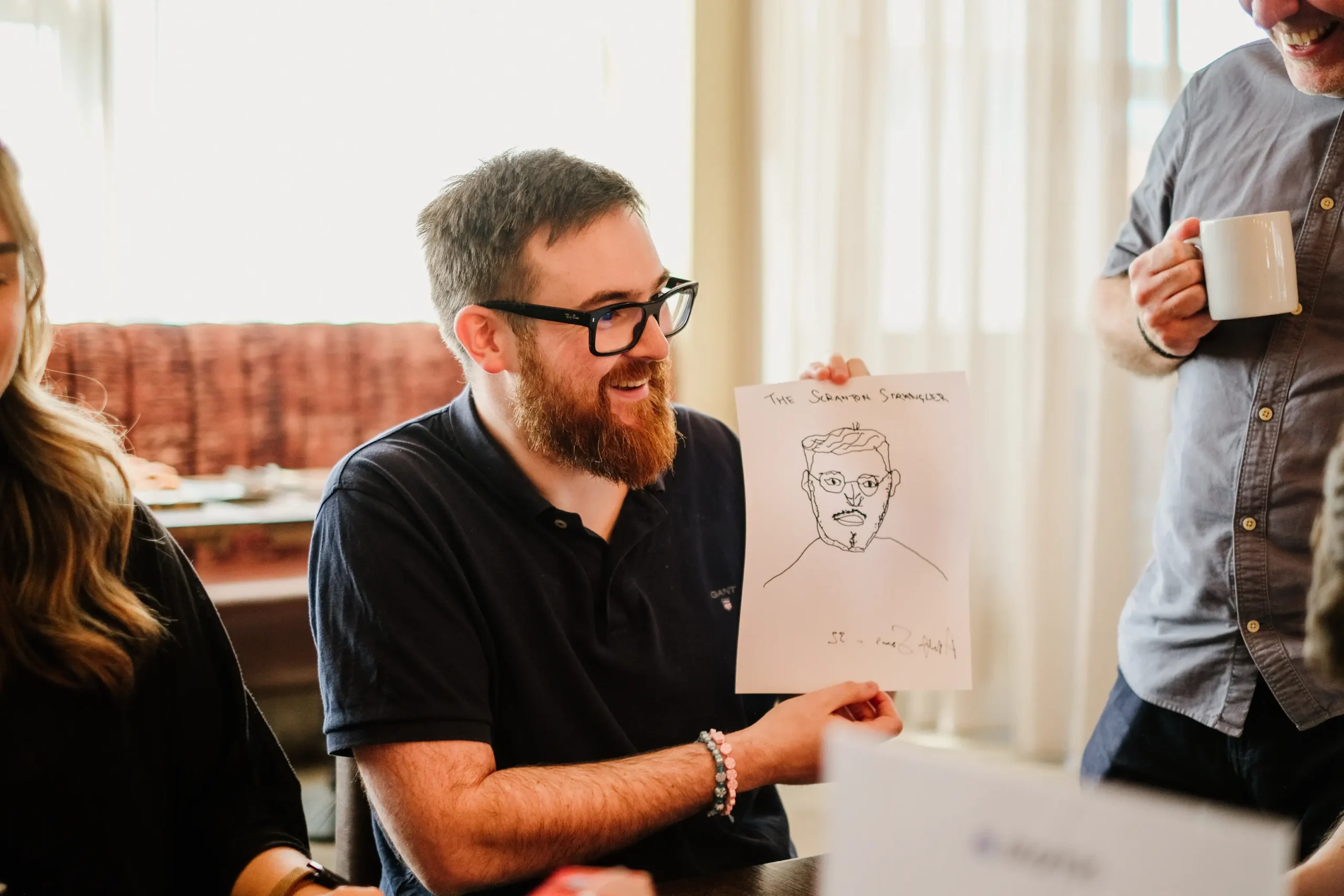
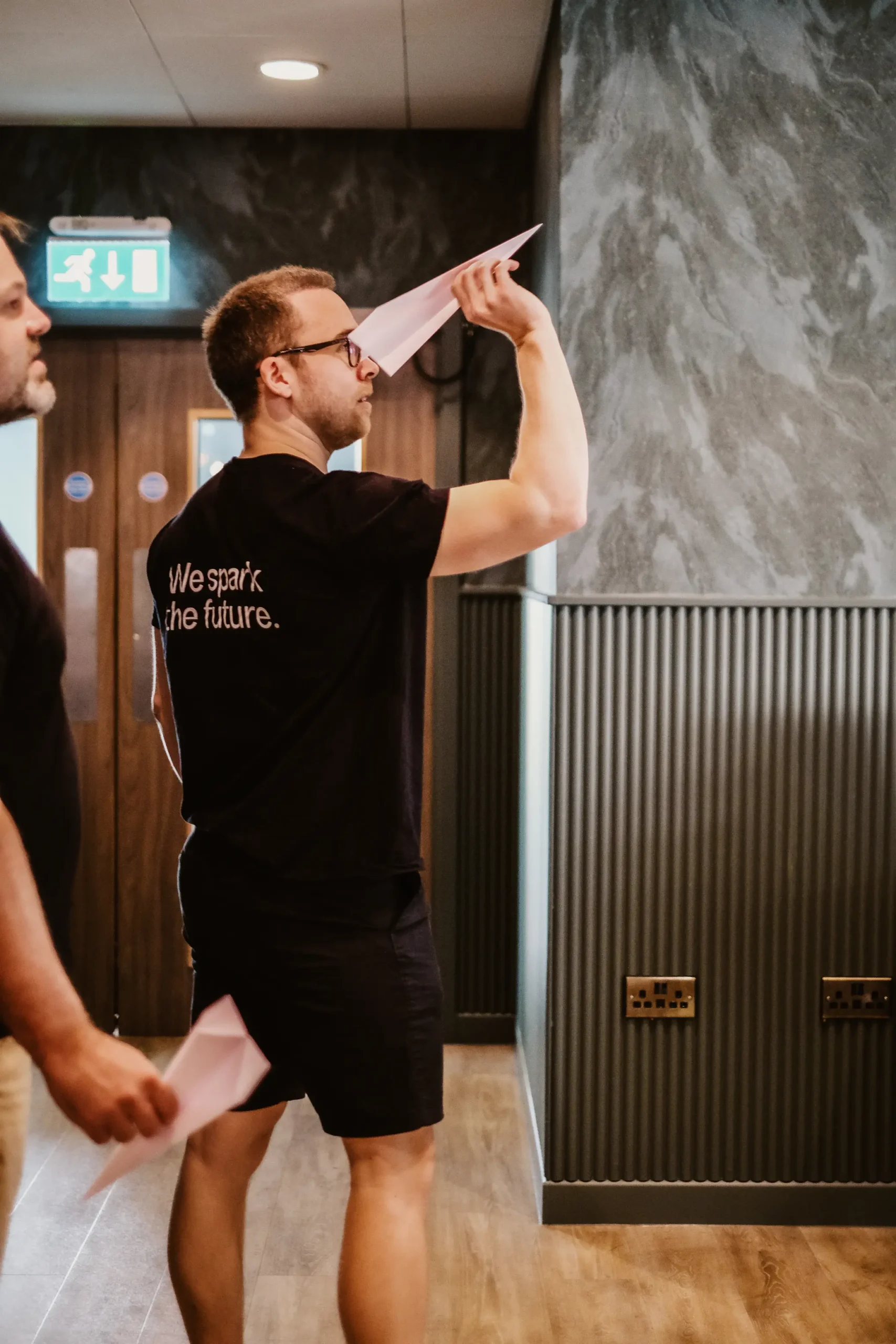
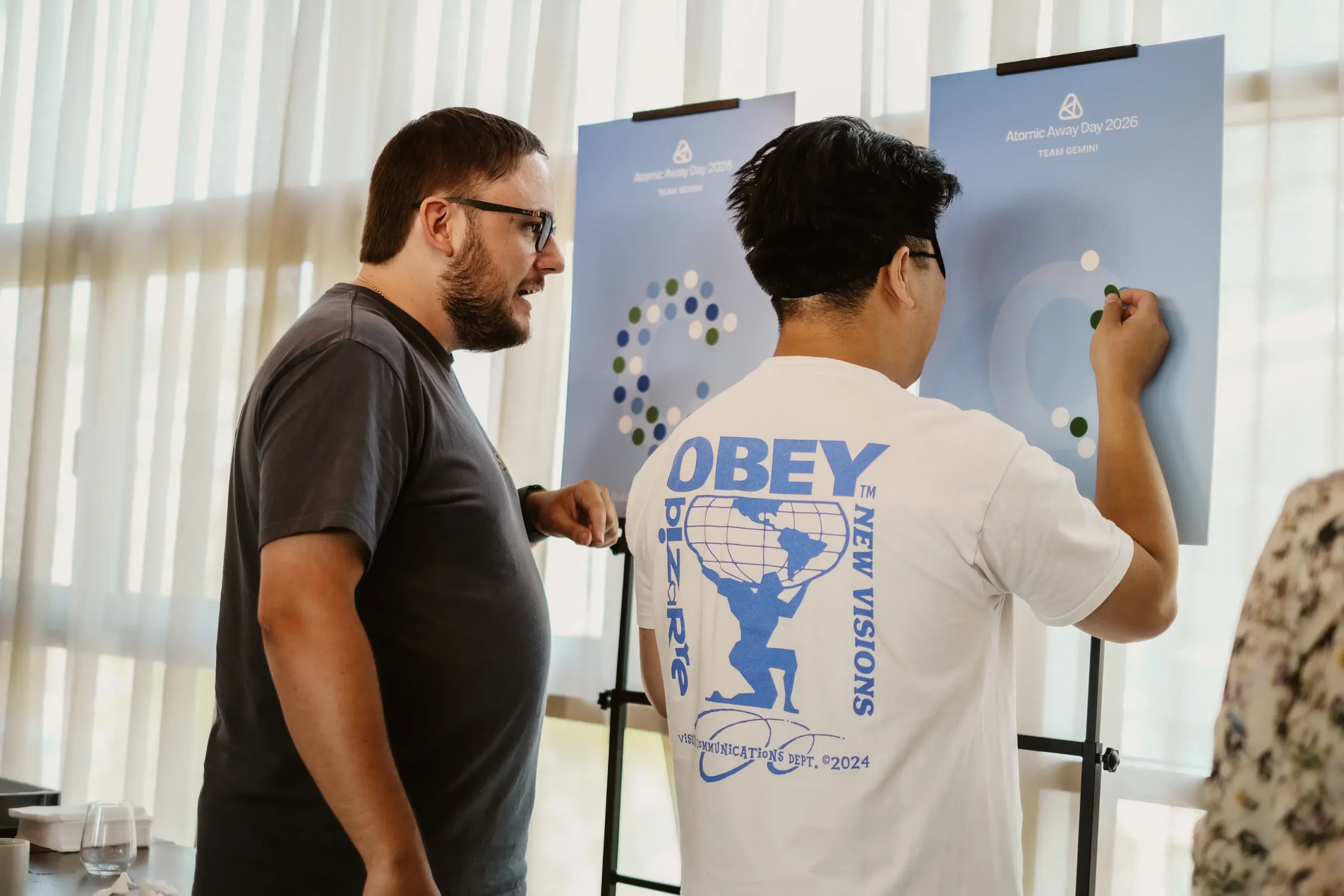
The floodgates of creativity swung wide open in the last week of August as teams from design, engineering, product, and delivery locked in for Atomic’s 5th annual hackathon. The two day event was centered around a single theme, ‘Intelligence in the real world’ .
Historically, a 2 day hackathon might have produced an impressive concept, a polished mockup or a basic prototype. This time around, with AI accelerating the routine mechanics, our teams spend two intensive days grappling much bigger challenges and developing feature-packed solutions to real world problems.
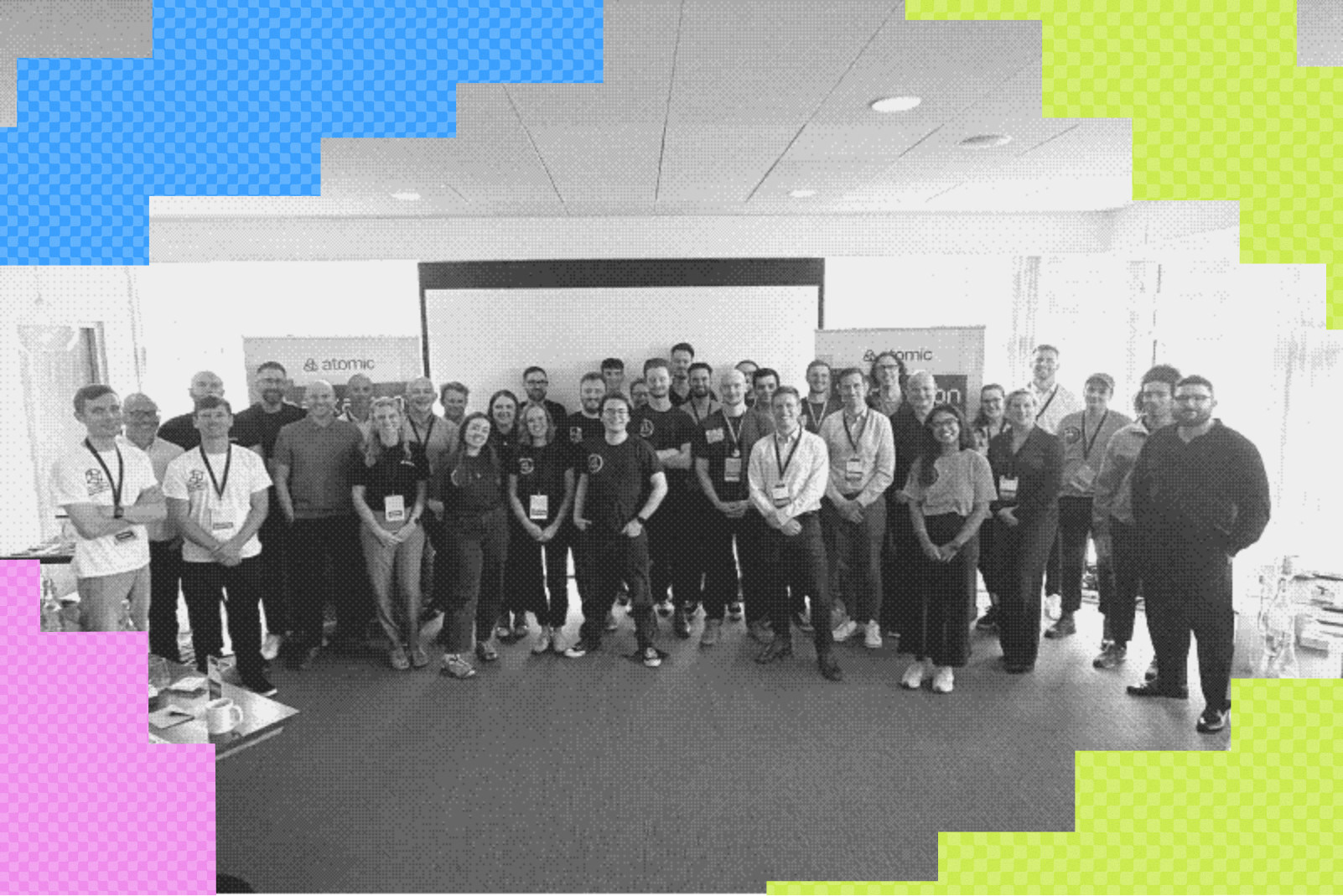
Rather than setting hypothetical briefs, we invited clients from across the manufacturing, automotive, construction, and leisure industries to put forward genuine challenges encountered within their businesses.
The parameters were simple: Teams had one and a half days to come up with a solution and build a working prototype, with no restrictions on the technology they could use. This was followed by a live demonstration to our judging panel of industry experts, who scrutinised each idea and put the teams’ technical and commercial thinking to the test.
We structured the event around an evaluation matrix across four distinct categories:
Feasibility & Technical Execution
Evaluates the technical craft, working reality, and practical viability of the solution.
Innovation & Creativity
Measures the originality of the concept, the use of innovative technologies, and how creatively technology was applied.
Business Impact Potential
Assesses the commercial viability of the solution and the tangible value it creates for target business clients.
Presentation & Demo
Evaluates how effectively the team articulates their vision and demonstrates their build.
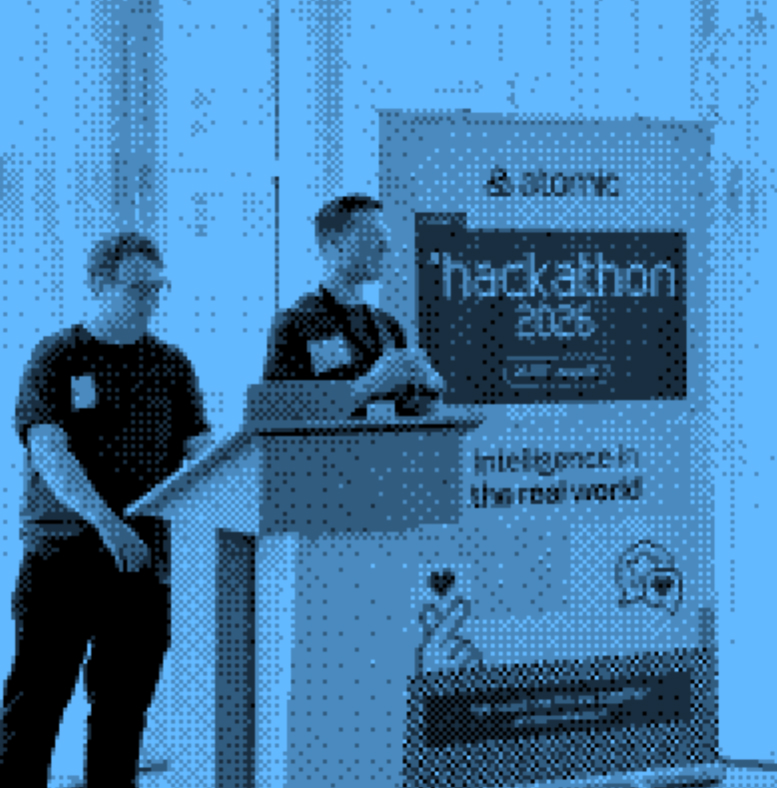
When the clock started, each of our five multidisciplinary teams had just 36 hours to solve their challenge and turn their ideas into a convincing working prototype.
Day 1
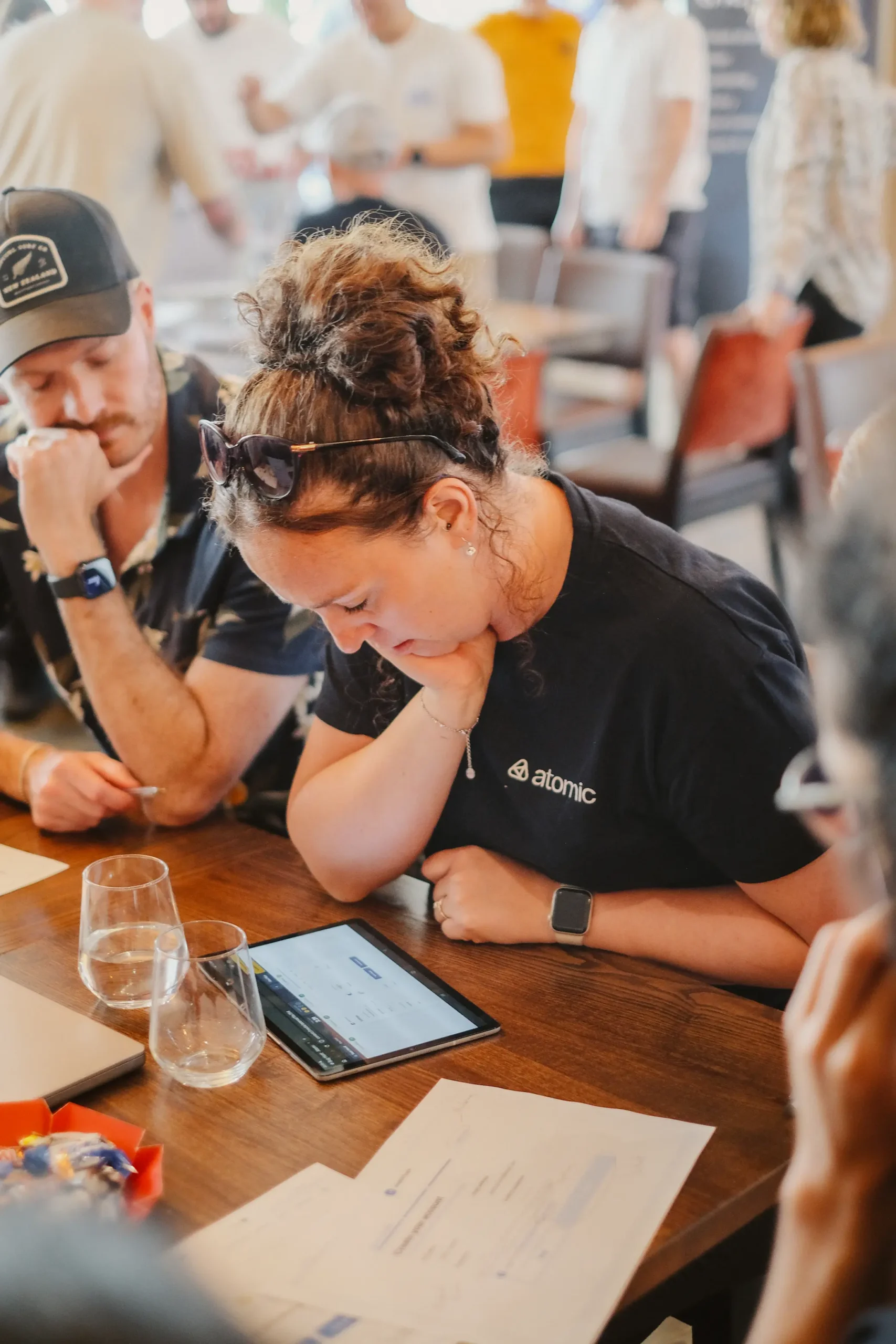
Teams spent 24 hours (fueled by pizza and copious amounts of coffee) mapping data schemas, training localised models, designing interfaces and building out functionality.
Day 2
Teams arrived early at the event space and used the morning session to finalise their builds and rehearse their presentations. The afternoon saw each team present a live demonstration of their solution with a time limit of 20 minutes plus time for Q&A from our judges.
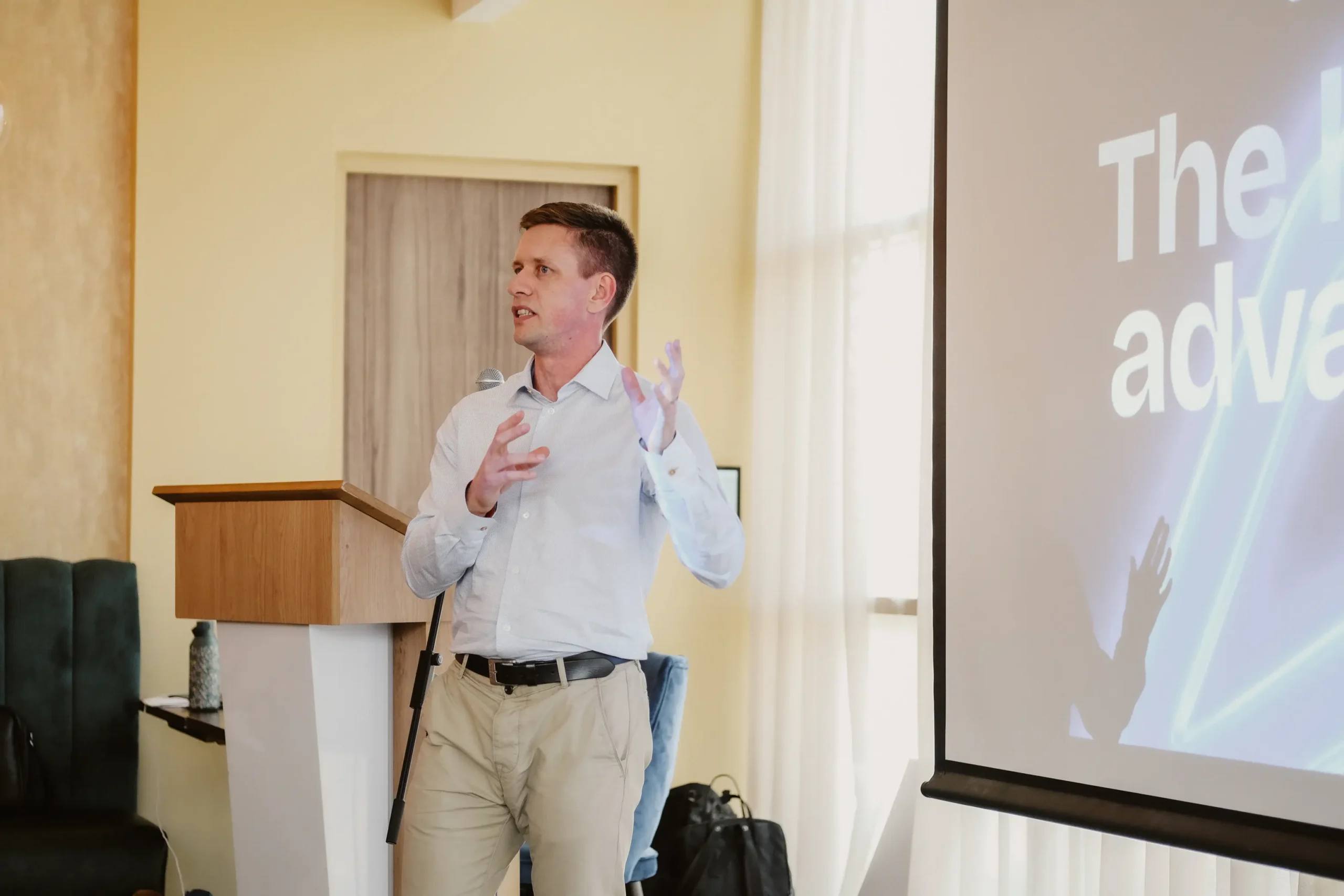
An executive judging panel evaluated the technical and strategic readiness of the final applications with the prize of an extra day’s holiday on offer for each of the winning team. With representatives from Center Parcs, JCB, Jaguar Land Rover, Workdry and Laing O’Rourke, the bar was very high.
RAG to Riches
The Challenge: Smart house keeping
How might we create an intelligent, hands-free housekeeping system that uses occupancy information and live operational data to coordinate teams more effectively?
The Solution
Sweep is an automated scheduling and live monitoring system optimised for holiday park changeover days. During planning, Sweep executes algorithmic scenario modeling to establish the most efficient use of staff hours to maximize property readiness. On live changeover days, the platform combines physical in-lodge sensors with a hands-free staff application to give resort operations managers real-time visibility into lodge clean status, in-progress turnarounds, or delayed properties.
Quantifiable Impact
The Flying Hackfish
The Challenge: Will it fit?
How might we create an intelligent map that only shows car parks suitable for a driver’s specific vehicle?
The Solution
Ample uses computer vision to automate vehicle sizing. By processing a single mobile photo of a vehicle, the application calculates precise spatial dimensions—dynamically accounting for temporary add-ons like roof boxes or bike racks. It references these dimensions against localised parking facility space data to provide drivers with a confidence rating prior to arrival that their car will fit.
Quantifiable Impact
Farmer's Four
The Challenge: Virtual Concierge and Booking Agent
How might we create an AI concierge that proactively calls guests, understands their needs, and helps them discover and book relevant activities through a natural conversation?
The Solution
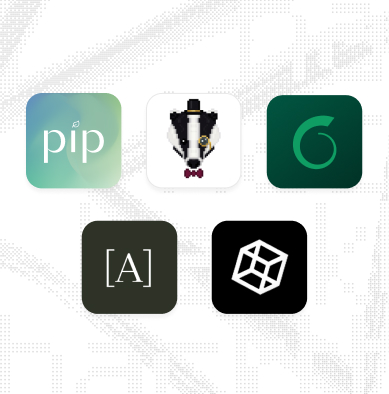
Pip is an AI concierge for the leisure industry, which aims to take the cognitive load of planning away from the guest. Guests can speak naturally to Pip to explore and book things to do, with Pip giving personalised recommendations based on guest data whilst avoiding itinerary clashes. Pip is designed with zero-UI in mind, leveraging conversational AI for a hands-free frictionless experience.
Quantifiable Impact
The Fourth Wall
The Challenge: Vision AI for Construction
Wildlife Monitoring – How might we use AI-enabled cameras to understand what is happening on a construction site and provide useful, timely insights – without continuously sending video to the cloud?
The Solution
Fourth Wall is a dashboard for construction site managers, which aggregates site camera’s, and uses AI trained models to detect what those cameras see. This allows site managers to produce automated reports on progress and receive/view alerts based on certain events. During a live demo the team demonstrated using an AI model to detect PPE, triggering an alert to the dashboard when this was missing. This showcased how AI models can detect events locally, and only send data to the cloud when required.
Quantifiable Impact
Team_Name_FINAL_V4.zip
The Team
Ashleigh Sims, Mark Dickson, Joe Griffin, Amy Thorn
The Challenge: Wildlife Monitoring
How can we increase the efficiency of environmental monitoring teams by continuously monitoring and analysing sensor and video feeds to detect animal populations, flag invasive species, map density hotspots in real time, and measure ecosystem recovery?
The Solution
That’s the Badger is an environmental analytics platform engineered to handle sparse, low-resolution, or low-light video records rather than static photography. It uses an active human-in-the-loop validation layer: when the system encounters highly ambiguous wildlife behavior, it flags the clip for rapid manual verification, which immediately retrains the localised model to improve subsequent autonomous accuracy.
Quantifiable Impact
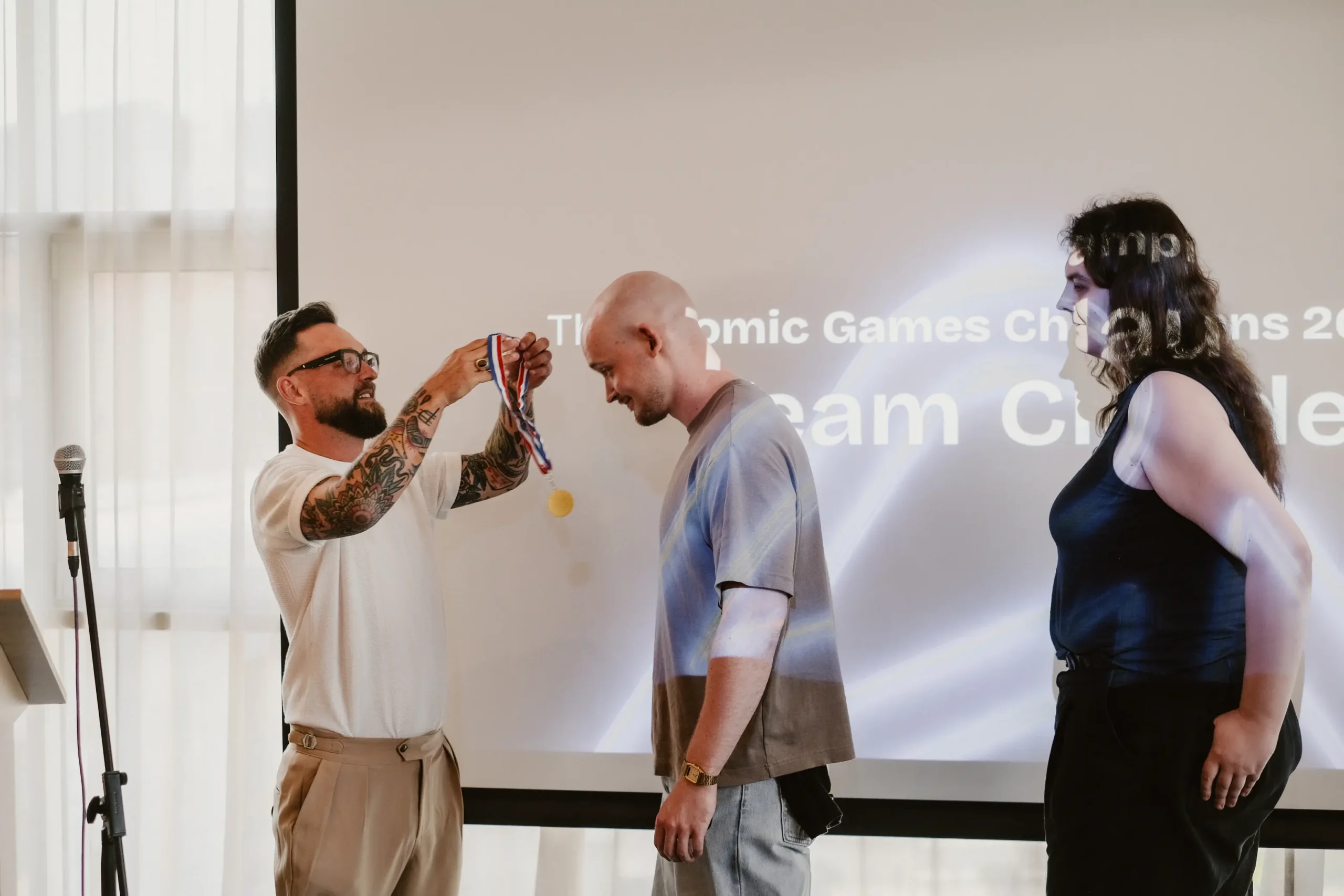
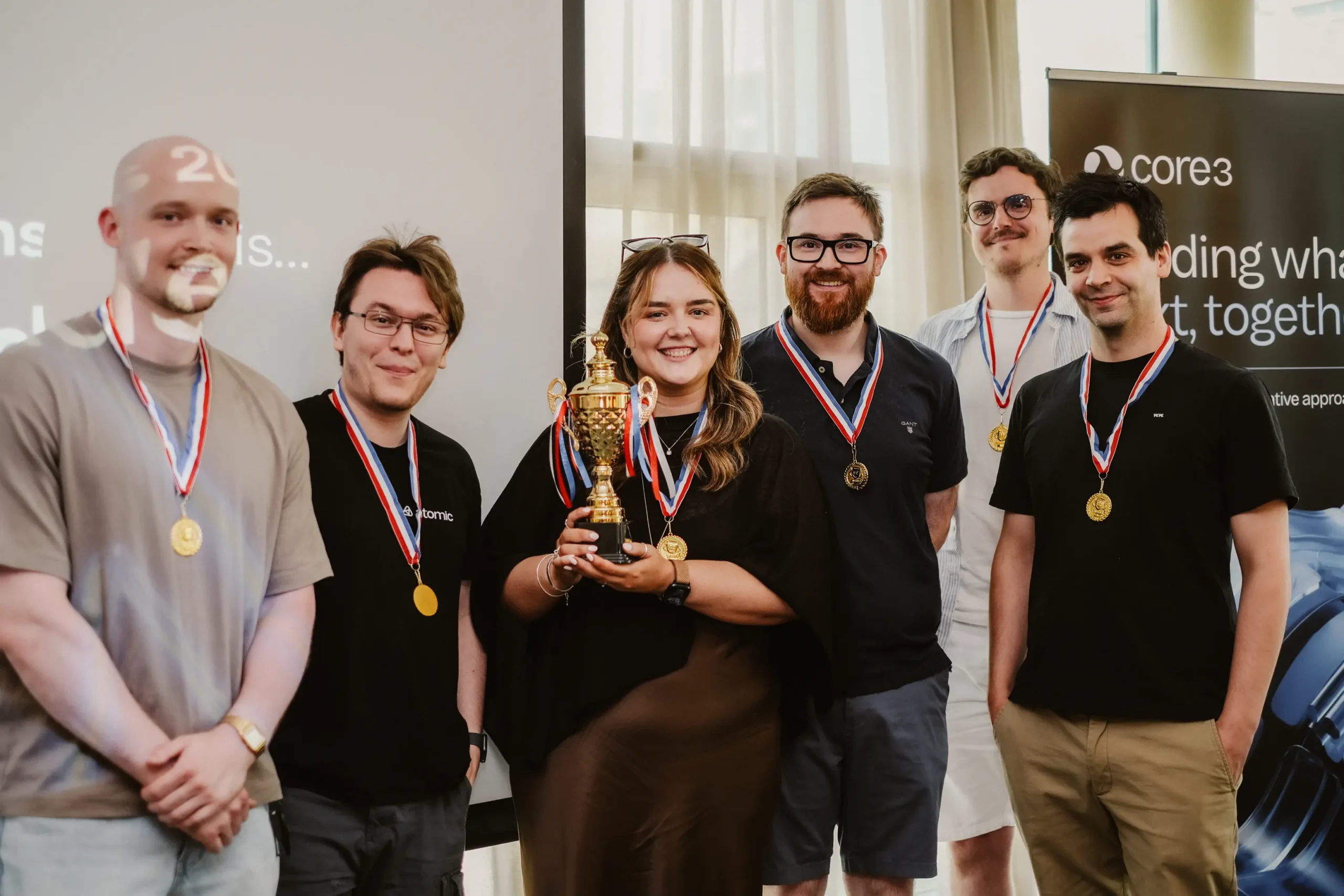
The competition was exceptionally close, with less than a single mark separating the top two entries – a reflection of the calibre of execution across all the teams. Ultimately, RAG to Riches took first place with Sweep, its intelligent housekeeping platform.
The judging panel was unanimous in its praise for Sweep’s commercial promise and ability to scale across large resorts, international hotel groups and cruise lines. The judges were equally impressed by the breadth and technical complexity of the working solution the team had built in just a day and a half.
While Sweep took the top prize, the quality, creativity and sheer effort demonstrated across every entry made this our strongest hackathon yet. And the work will not end here: we’re already exploring how selected prototypes could be refined, developed and potentially deployed in partnership with our clients.
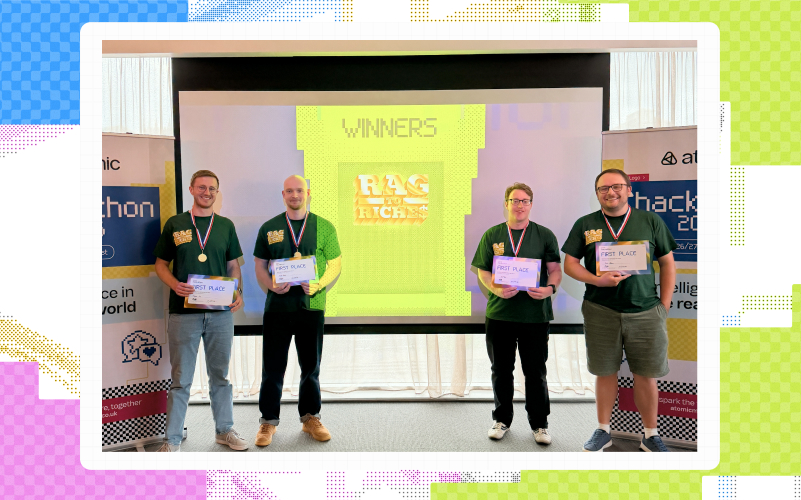
The hackathon demonstrated what becomes possible when multidisciplinary teams combine deep expertise, operational freedom and the right tools. Given real business problems to solve – and the autonomy to decide how – they created five functional applications using real data and third-party APIs in less than 36 hours.
AI played an important role in that pace, accelerating routine development work and allowing the teams to spend more time on architecture, integration, user experience and commercial viability. But the technology was only part of the story. The quality of the results came from experienced people working closely together, making good decisions and turning ambitious ideas into working software.
If your organisation is looking to move past generic AI hype and test how technology could address a complex operational problem, we can help you explore it through focused rapid-prototyping. We can also consider suitable problem statements as challenges for a future Atomic technical build event.
Interested in joining an employee-owned digital consultancy that values deep engineering capability and straightforward collaboration? We are always looking for talented people, view our open roles on our careers page.
This warning, published by OpenAI and signed by many of the world’s largest technology and financial companies, isn’t really about any new type of attack, but instead highlights the reduction of time between a weakness appearing and it being exploited. That “defenders’ window” has always existed, but with the advent of agentic tools, which are able to act autonomously & constantly without breaks, that window has shrunk to the point where periodic review can no longer be relied on to catch it in time.
A penetration test every three to six months, with a security review typically following close behind on the same schedule. These exploits still existed, but attackers were moving at roughly the same pace as the reviews. Now, the rise of autonomous AI is pushing systems to change at a far more continuous and rapid pace – and our security checks need to match it.
This is why we believe organisations need to move to a model of ongoing assurance, rather than periodic assurance. At Atomic, that means continuous AI security testing and auditing – a team of AI agents trained specifically to probe defences for vulnerabilities. They test through the same vectors an attacking system would: configuration, permissions, edge cases that get missed when testing is done in isolation. Because they’re fast, they can run continuously – or much more regularly – and because findings are ranked by a deterministic severity system, teams always know what actually needs attention before the next cycle starts.
This isn’t just our own position, the letter itself calls on security companies to “test defenses continuously,” and that’s exactly the gap continuous AI testing is built to close. We’ve already seen this catch vulnerabilities that traditional testing misses. In one recent review, we found three findings across three separate areas of a system, each one individually assessed as a low risk item on its own. Looked at together, they formed a much more serious vulnerability – the kind of gap that only becomes visible when you’re testing the system as a whole rather than component by component or vendor by vendor.
Human led testing will always bring a high level of judgement, depth, and a deep level of context for why the system works the way it does. Continuous AI testing gives you constant coverage and speed; human led testing gives you the depth to catch what only experience can find. For organisations serious about security, we recommend both, working together rather than one instead of the other.
And this responsibility doesn’t stop at your own systems. Most organisations today are only as secure as the weakest link in the chain of tools and vendors they depend on. That means asking real questions of your suppliers – whether bespoke software modules or SaaS – about what security reviews they’re running, what standards they’re following, and how often. Security is everyone’s responsibility across that chain, not something any single party can individually own.
The organisations that treat this seriously now, while the window for action is still open, will be in a much stronger position than those who wait for the next scheduled review to tell them what’s already gone wrong. Cyber defence needs to move from an item done once a quarter, to a continuous, board-level priority – and that shift starts now.
We’re pleased to announce that Atomic has been named as an approved supplier on the UK Government’s G-Cloud 15 framework, making it easier for public-sector organisations to access our digital expertise.
G-Cloud 15 is a UK Government framework that makes it easier for public-sector organisations to procure cloud-based technology and specialist digital services from approved suppliers.
Atomic’s appointment to the framework means organisations across central and local government, healthcare, education and the wider public sector now have a simpler route to access our expertise.
We already design and engineer complex digital products for major organisations, bringing together product strategy, UX and design, software engineering, cloud, data and AI. G-Cloud 15 gives us the opportunity to bring more of that experience into the public sector – whether that’s improving public-facing digital services, modernising ageing platforms or helping organisations make better use of data and emerging technology.
For us, it’s less about joining another procurement framework and more about making it easier to work with organisations where great technology can make a meaningful difference.
The challenges facing public-sector technology teams aren’t necessarily unique.
Legacy technology, fragmented user journeys, accessibility requirements, security, complex integrations and the pressure to deliver more with limited resources are challenges we’ve encountered across many of the enterprise environments in which Atomic already works.
Our approach is to combine strategic thinking with practical delivery. That means understanding the problem first, designing around genuine user needs and then using the right technology to create solutions that are secure, scalable and capable of delivering measurable value.
Being available through G-Cloud 15 now gives more public-sector organisations a straightforward way to access that capability.

Looking for a digital partner through G-Cloud 15? Get in touch with Atomic to discuss your digital ambitions and how we can support your next project through the G-Cloud framework.
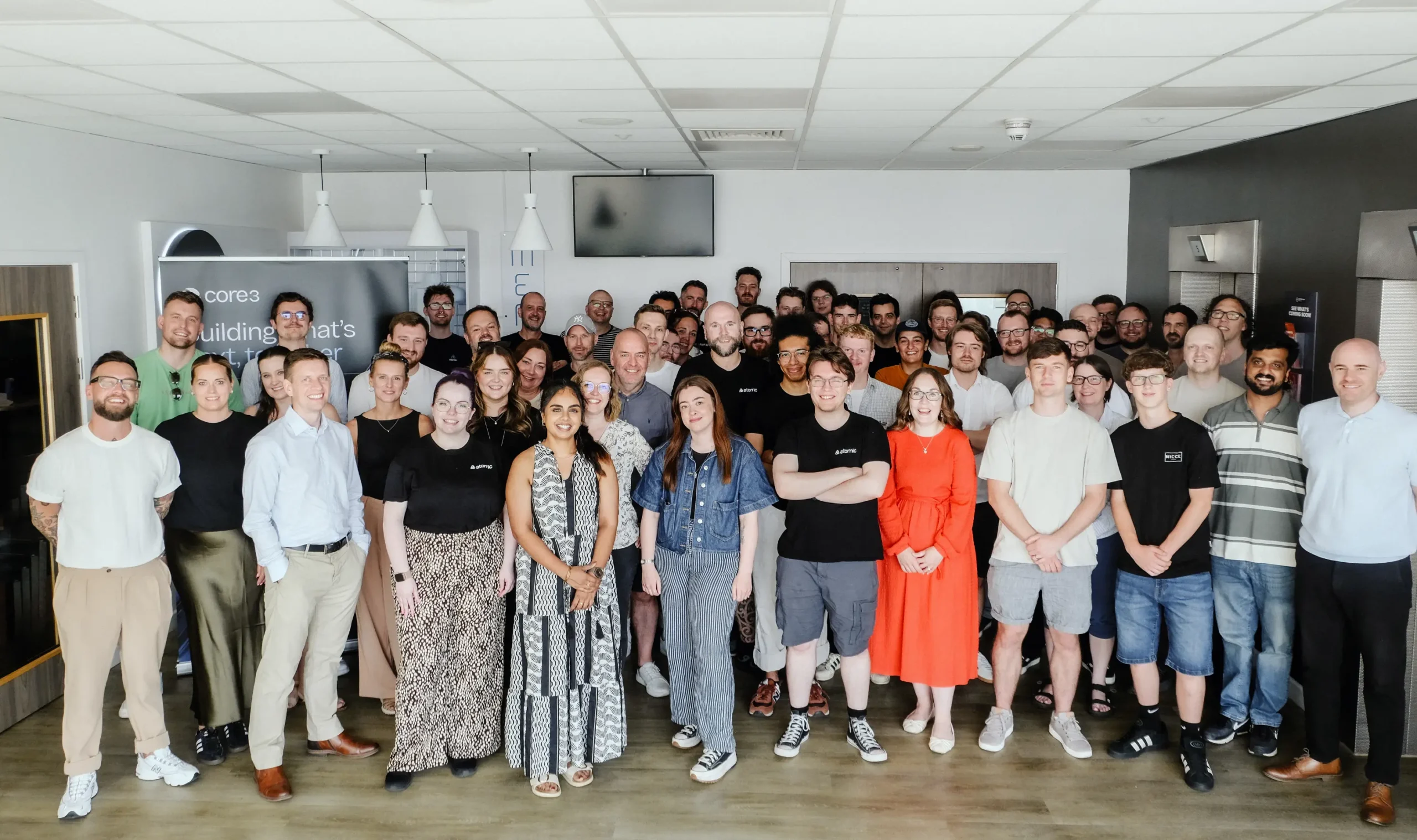
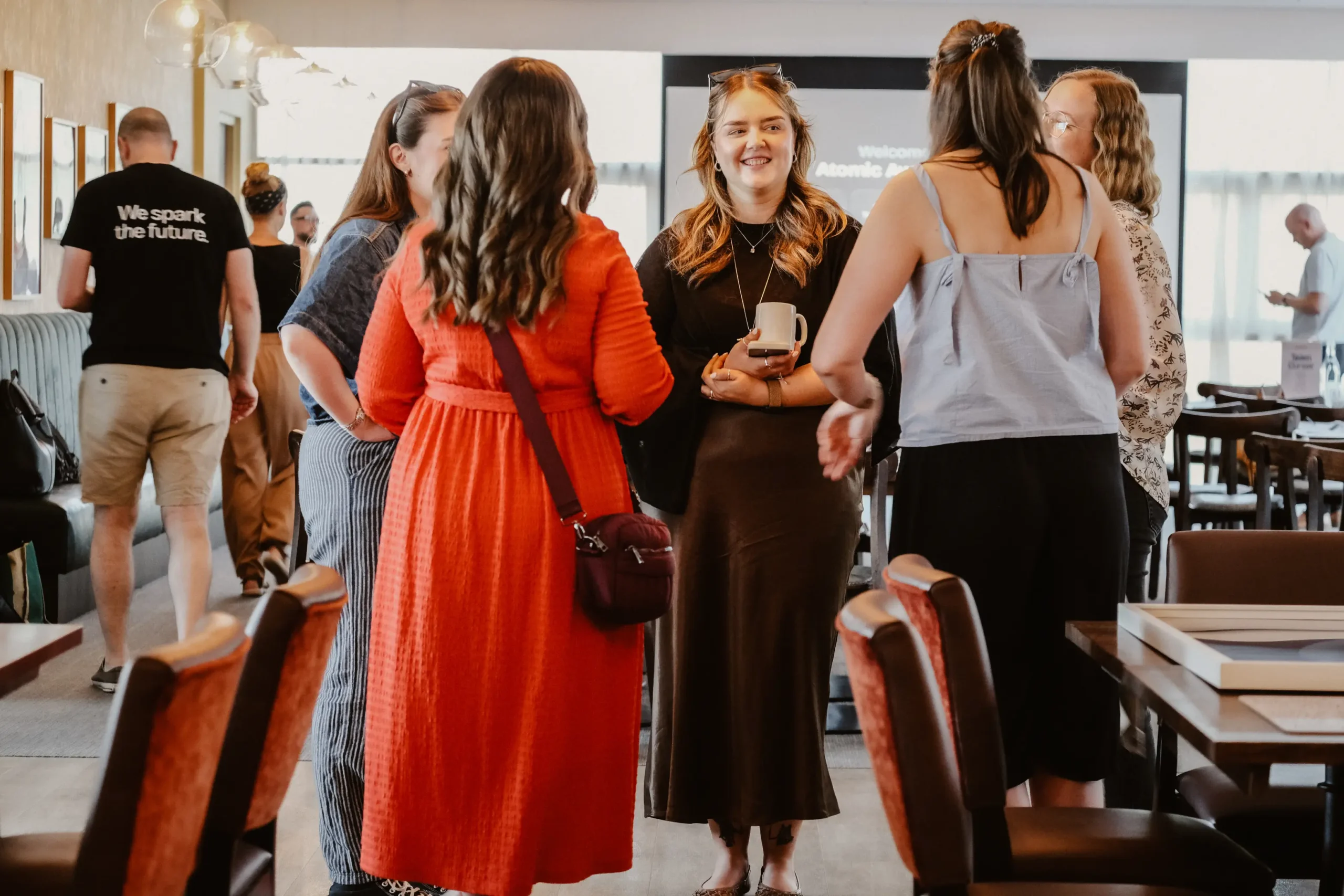
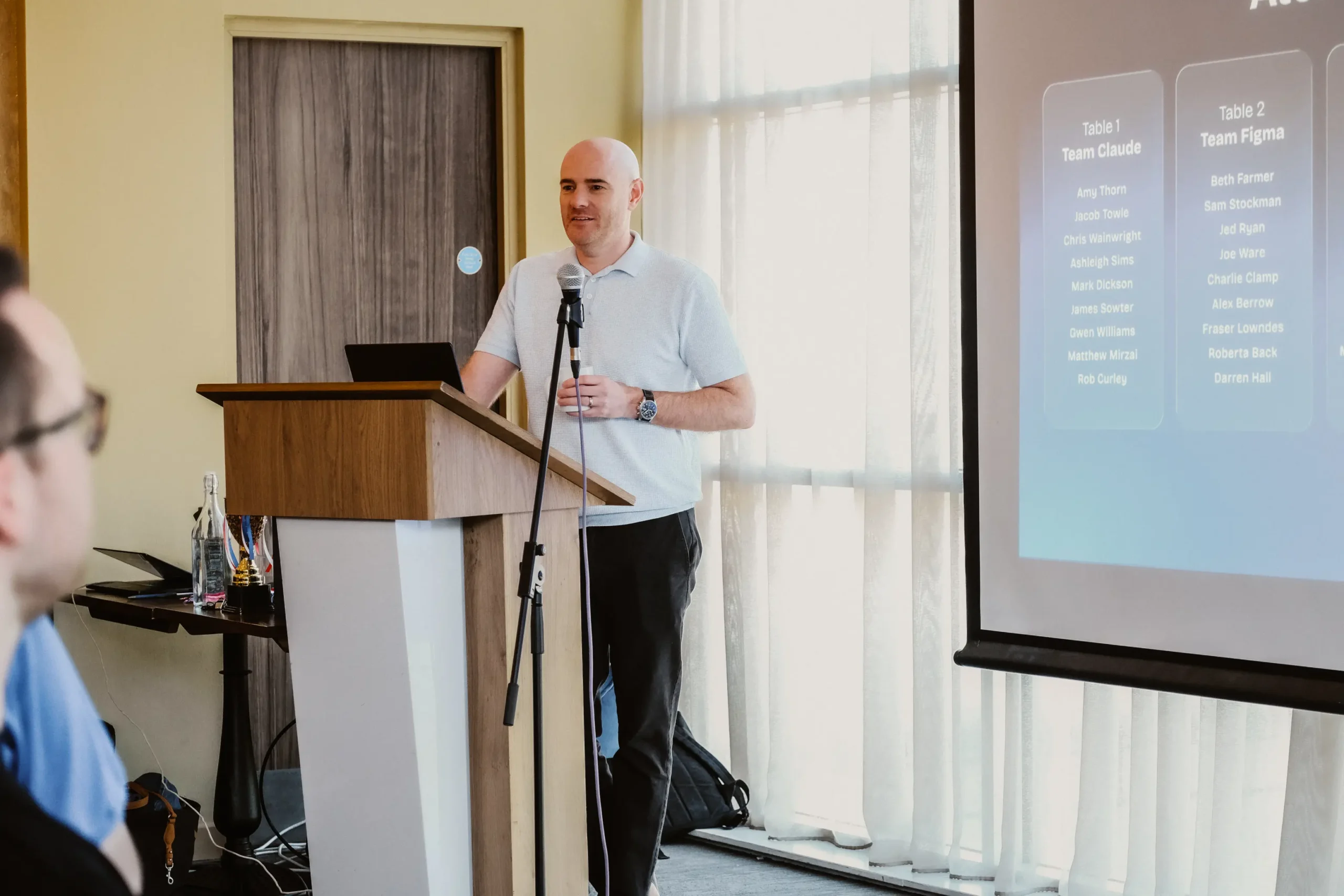
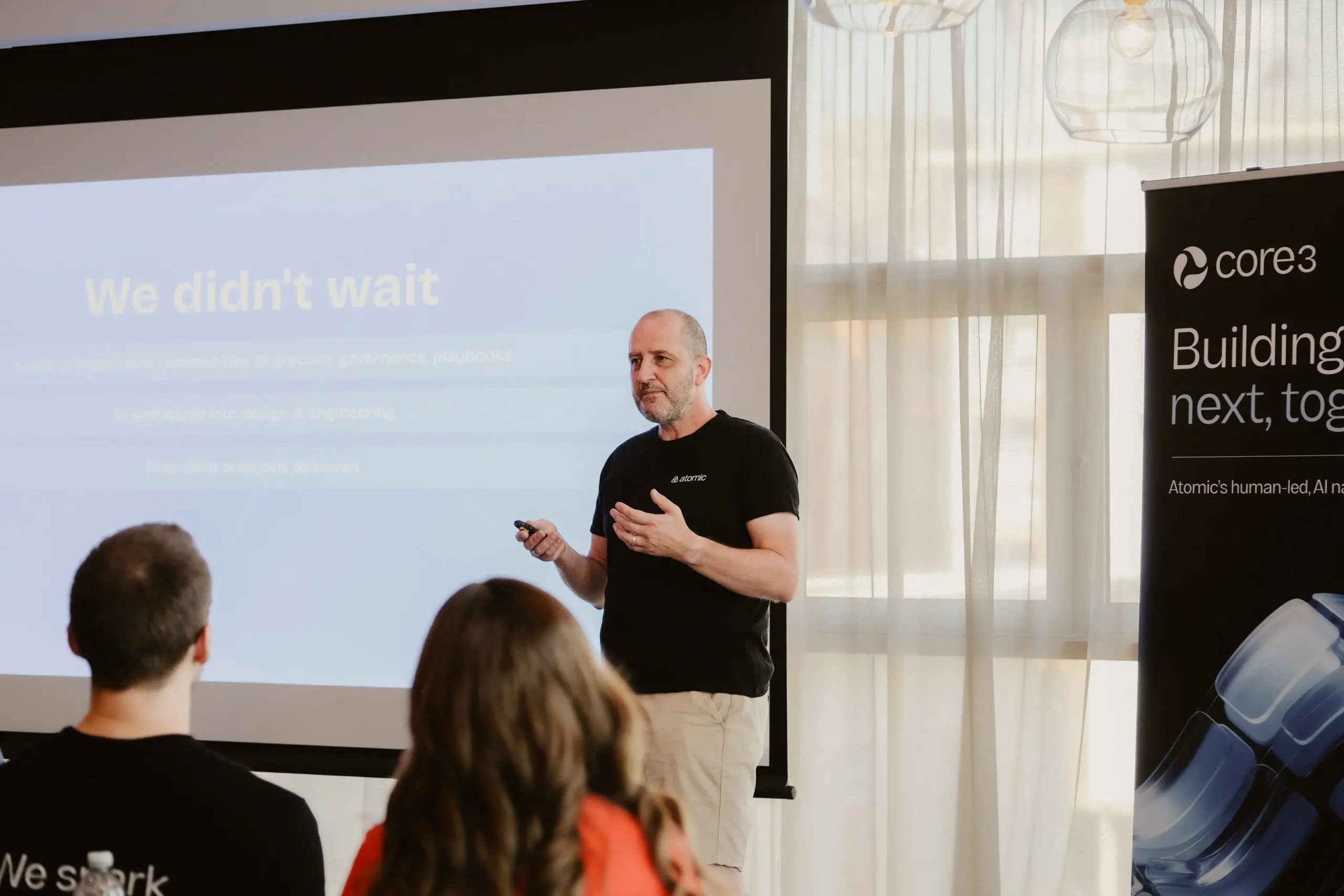
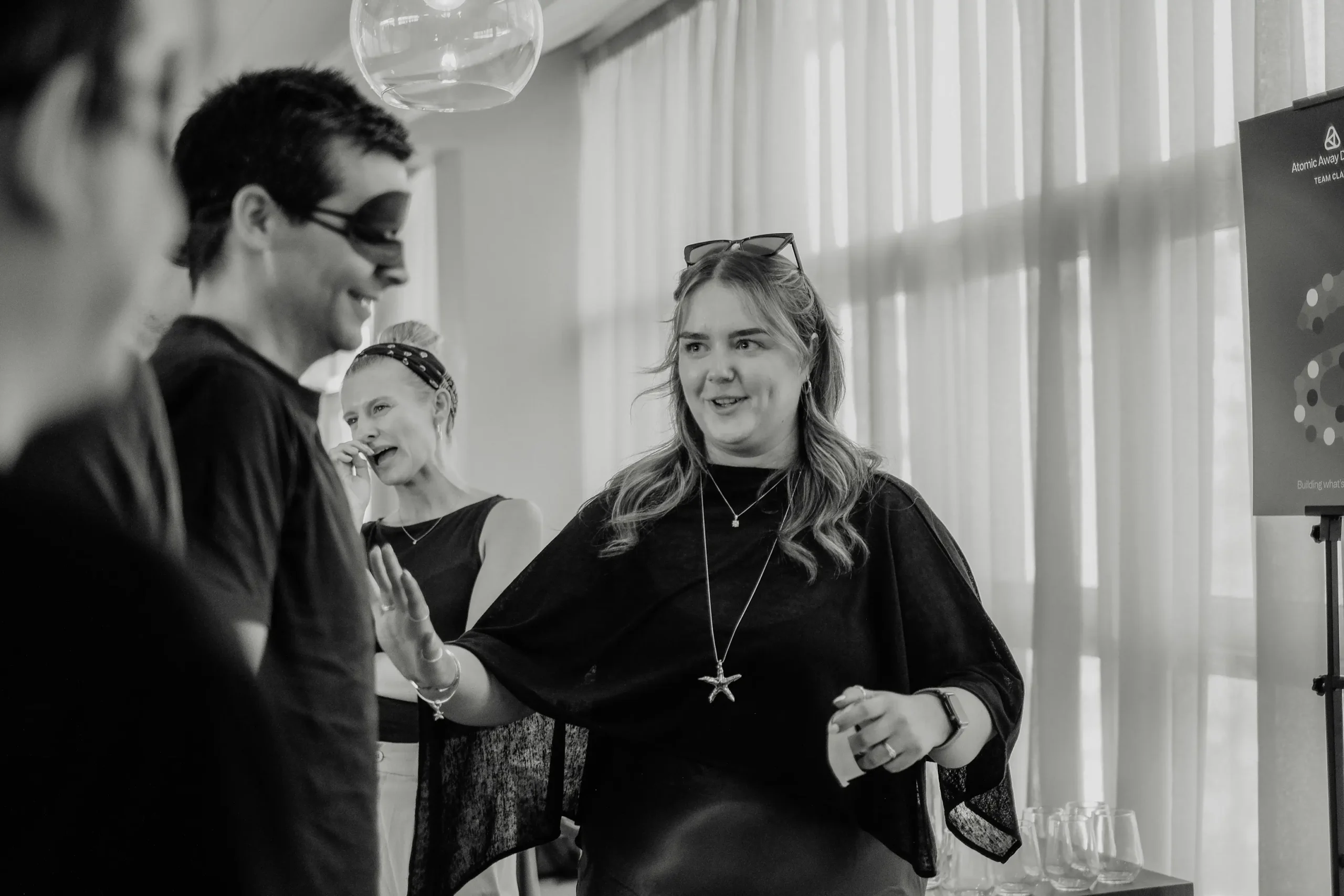
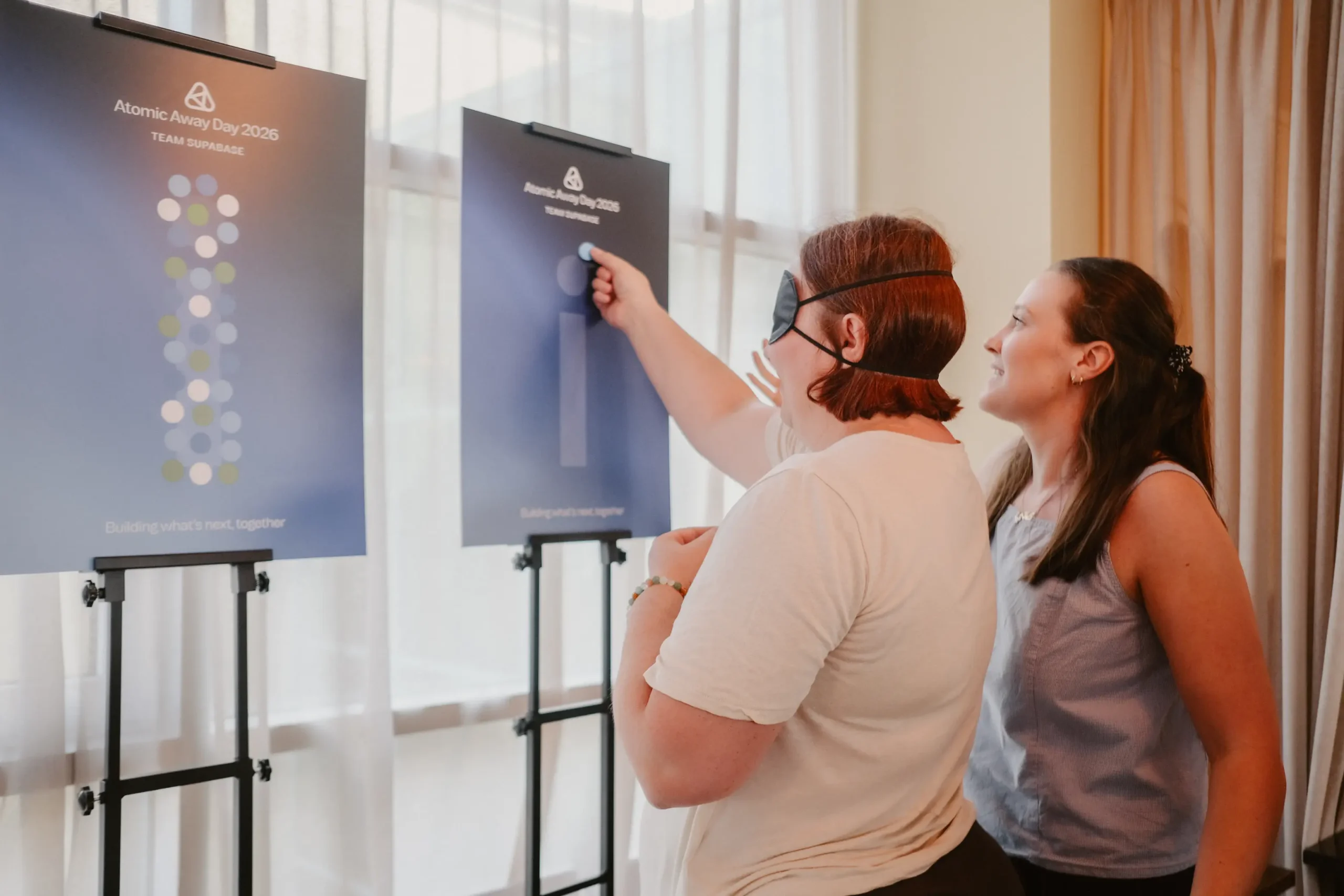
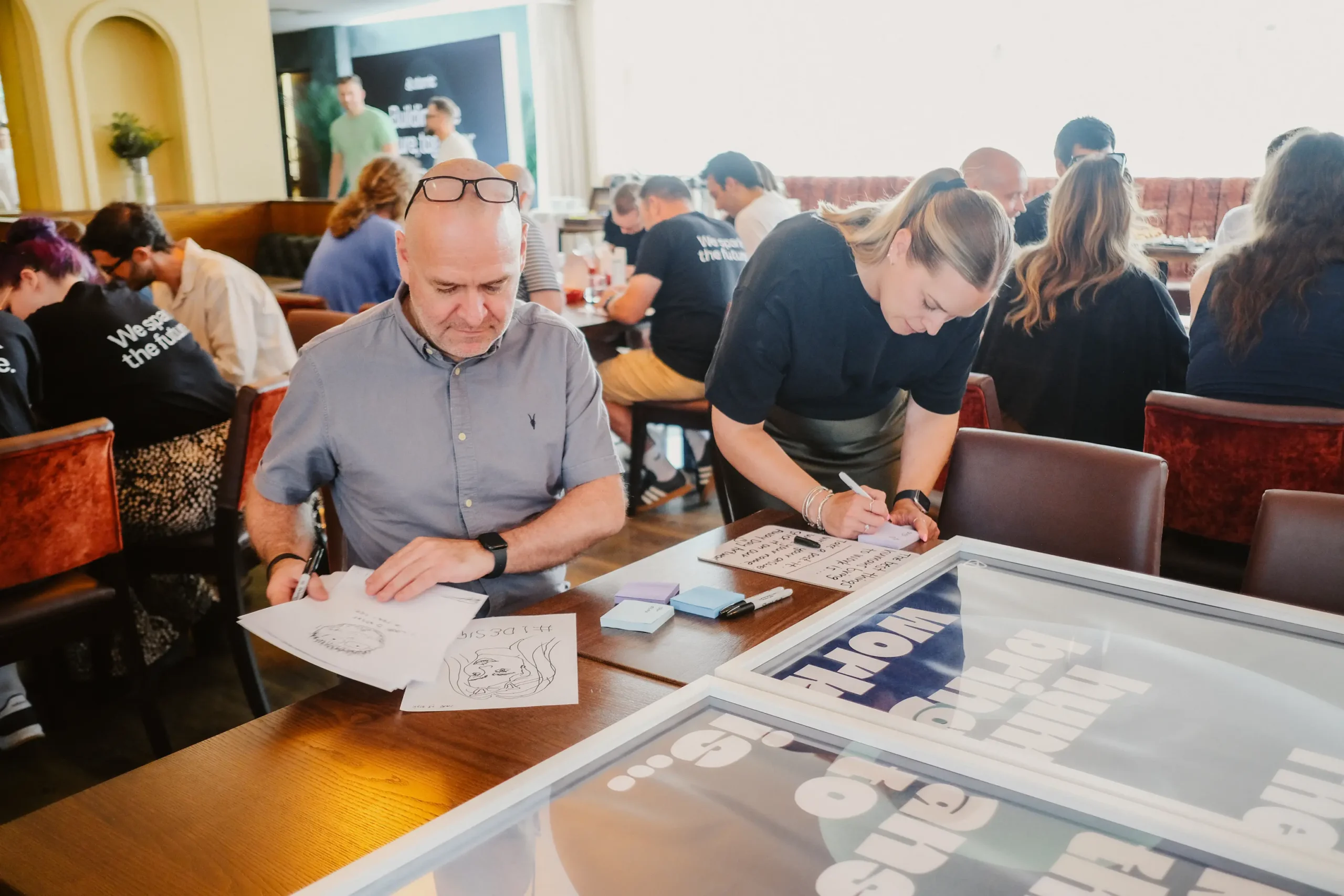
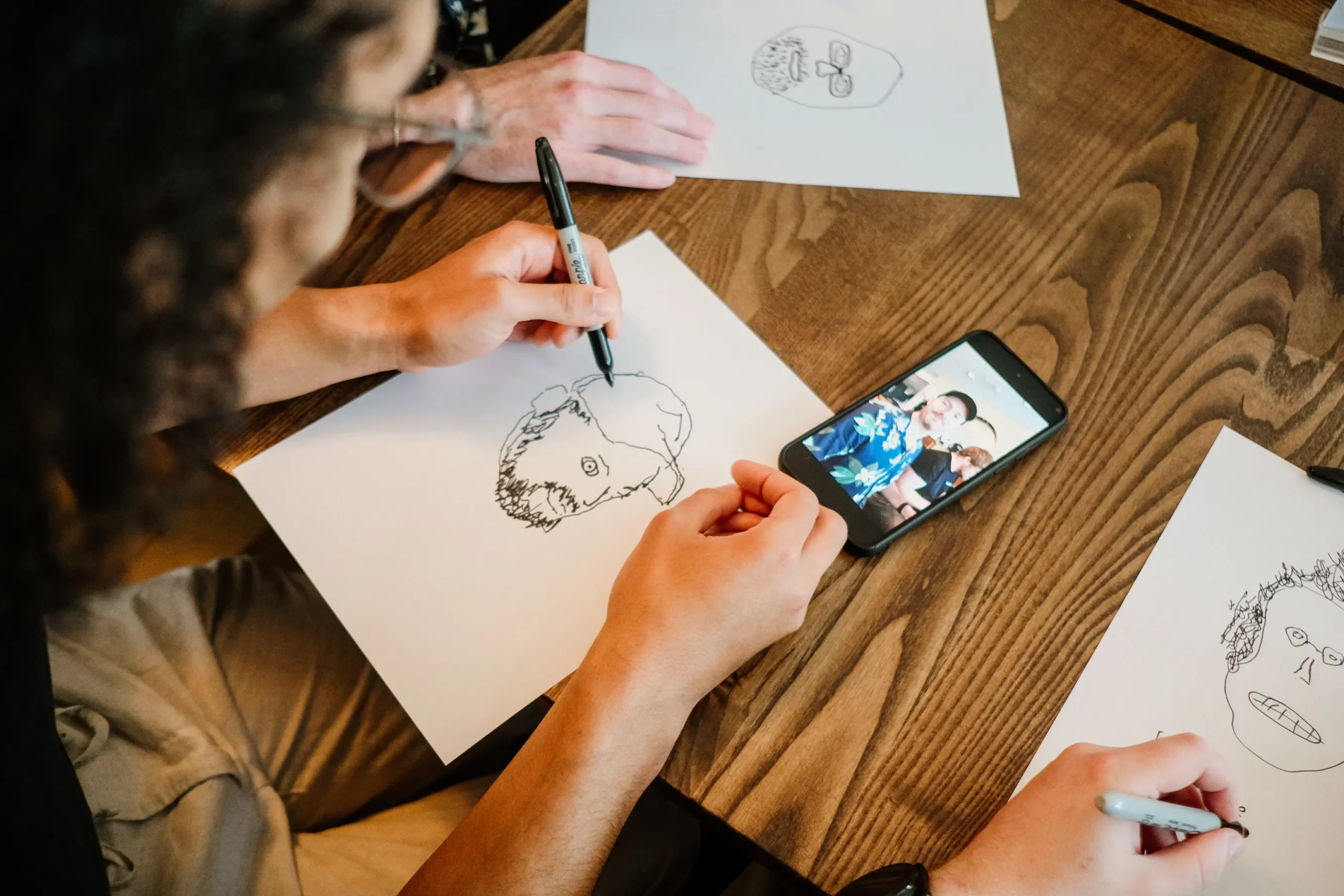
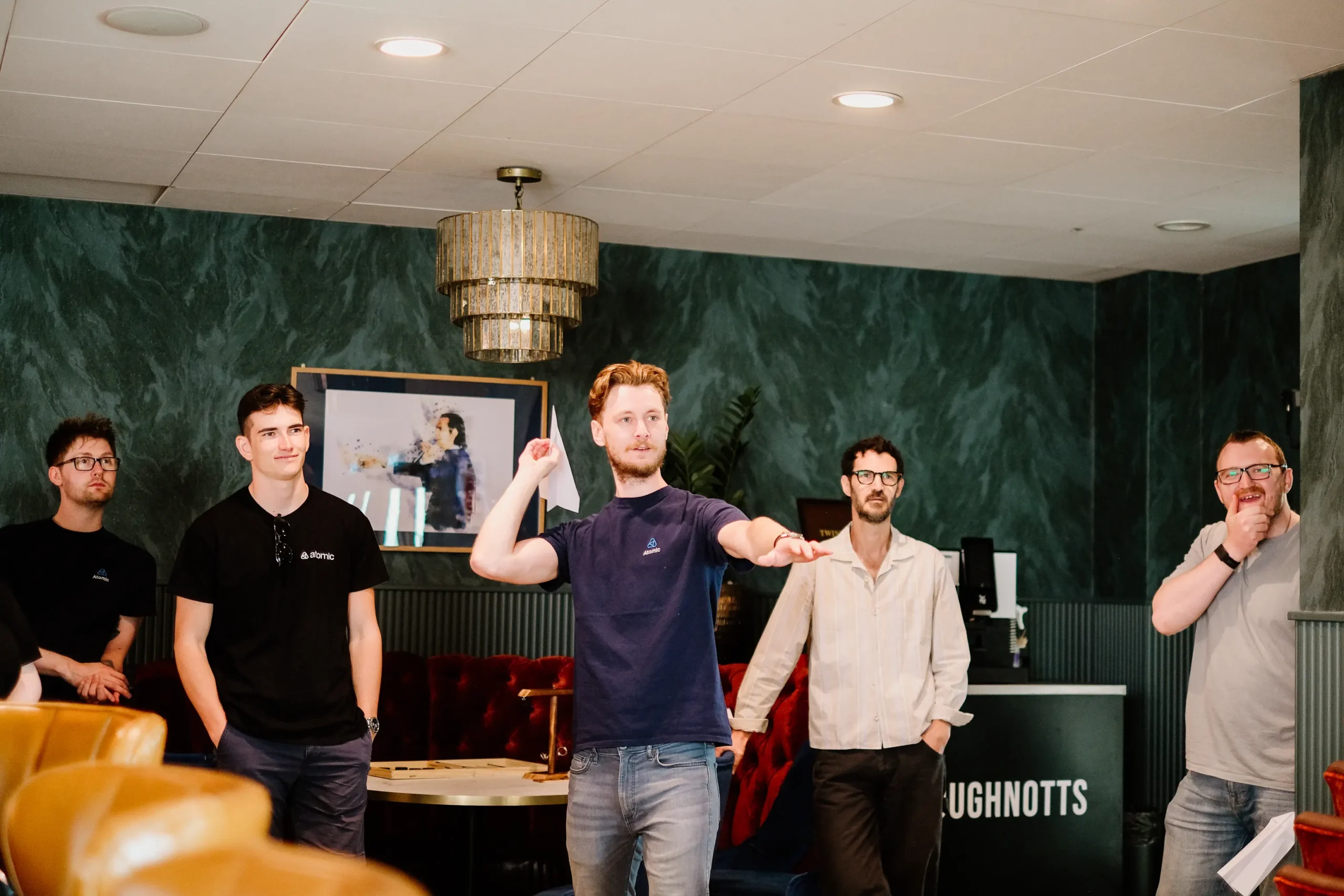
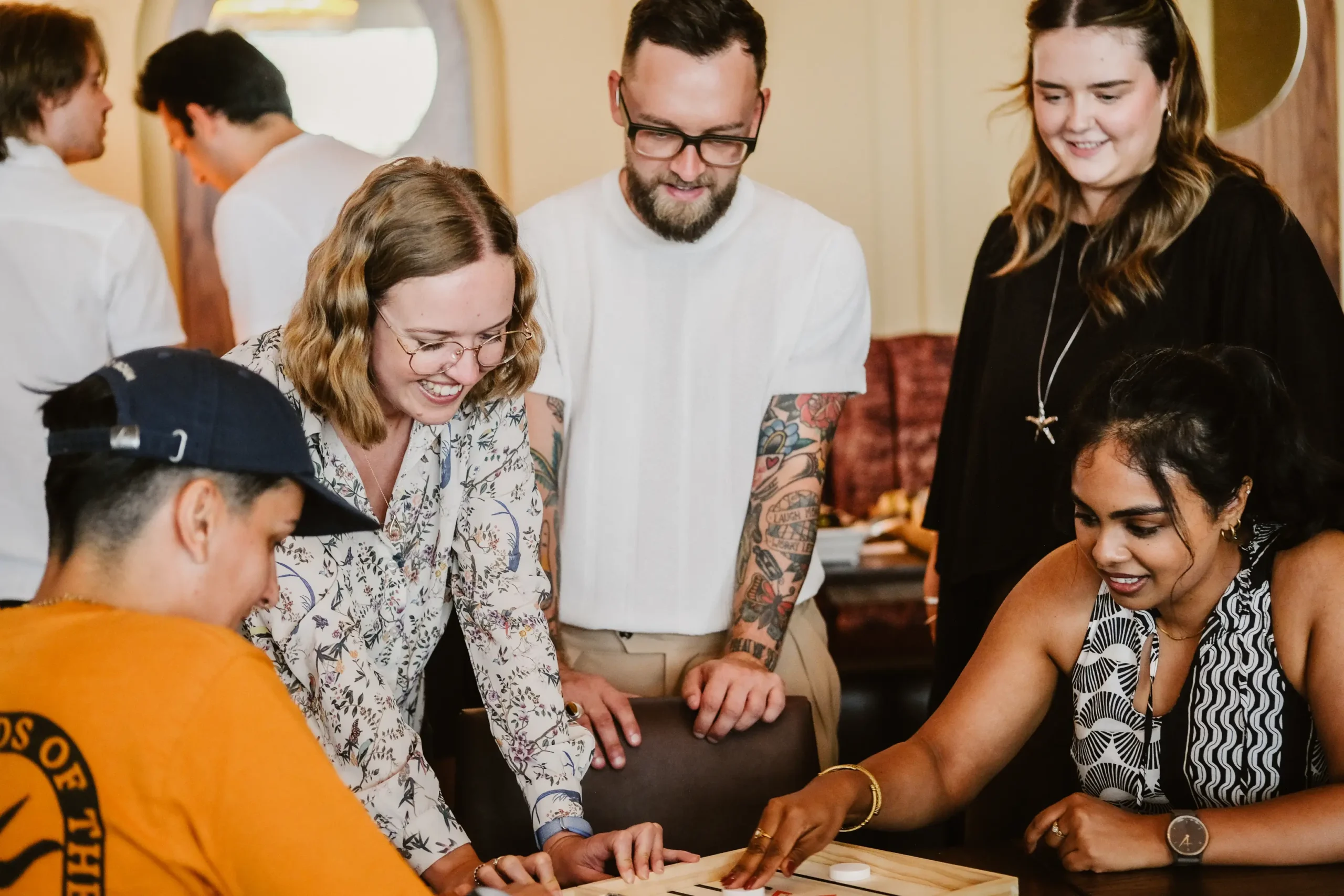
This year was exactly that. We heard about Core3, our native AI product lifecycle approach we’ve been piloting over the past 12 months and the thinking behind how we build now, with AI woven into every stage, with collaboration and a human-centre model key to delivery success. Six teams then went head to head in the Atomic Games, a set of six challenges, one for every capability across the business, that turned out to be a brilliant reminder of the skills behind the day jobs. Lunch gave way to the Atomic Awards, ten categories, some serious and some properly silly, all about celebrating the people behind the work as much as the work itself. The afternoon wrapped with a bit of fun and a chance to just enjoy each other’s company across a range of activities from golfing, go-karting, escape rooms to splatter painting and revisiting our youth at the Slick City action park.
Different sessions, same thread running through all of them: we’re better together, and what we build next, we build as one team. We’re not just building products. We’re building Atomic.





This certification marks a significant milestone for Atomic and reinforces our commitment to protecting sensitive information, managing risk responsibly, and maintaining the highest standards of security for our clients and partners.
ISO/IEC 27001 is widely regarded as the gold standard for information security. Achieving certification demonstrates that Atomic has implemented a robust framework for identifying, managing, and reducing information security risks across the organisation.
For our clients, this means added confidence that their data is handled with care, integrity, and industry-leading best practices. For our team, it reflects a culture of accountability, continuous improvement, and shared responsibility for security.
Reaching this milestone was a collective effort across the business. From defining policies and processes to embedding security into our day-to-day operations, the certification journey required focus, collaboration, and a long-term commitment to doing things the right way.
Achieving ISO/IEC 27001 certification is a testament to the dedication and professionalism of our team. As information security is fundamental to the trust our clients place in us, this certification not only validates our approach today, but also strengthens our foundation for the future.
While achieving ISO/IEC 27001 certification is an important achievement, it’s not the end of the journey. Information security is an ongoing responsibility, and we remain committed to continually reviewing, improving, and strengthening our controls as technology and risks evolve. If you’re looking for a technology partner that takes security seriously from day one, we’d love to talk. Get in touch to learn how we can support your next project and protect what matters most.
Based on two recent polls we ran, it’s clear that for our respondents that the biggest story of 2026 won’t just be what we build – it will be where innovation happens, and who leads the charge. The technology world is bracing for one of the most transformative years in recent memory. The pace of innovation hasn’t slowed – AI copilots have become standard in the workplace, quantum computing is inching closer to real-world utility, and edge AI is pushing intelligence out of the cloud and into devices. Below we break down the results and what we predict they mean for the year ahead.
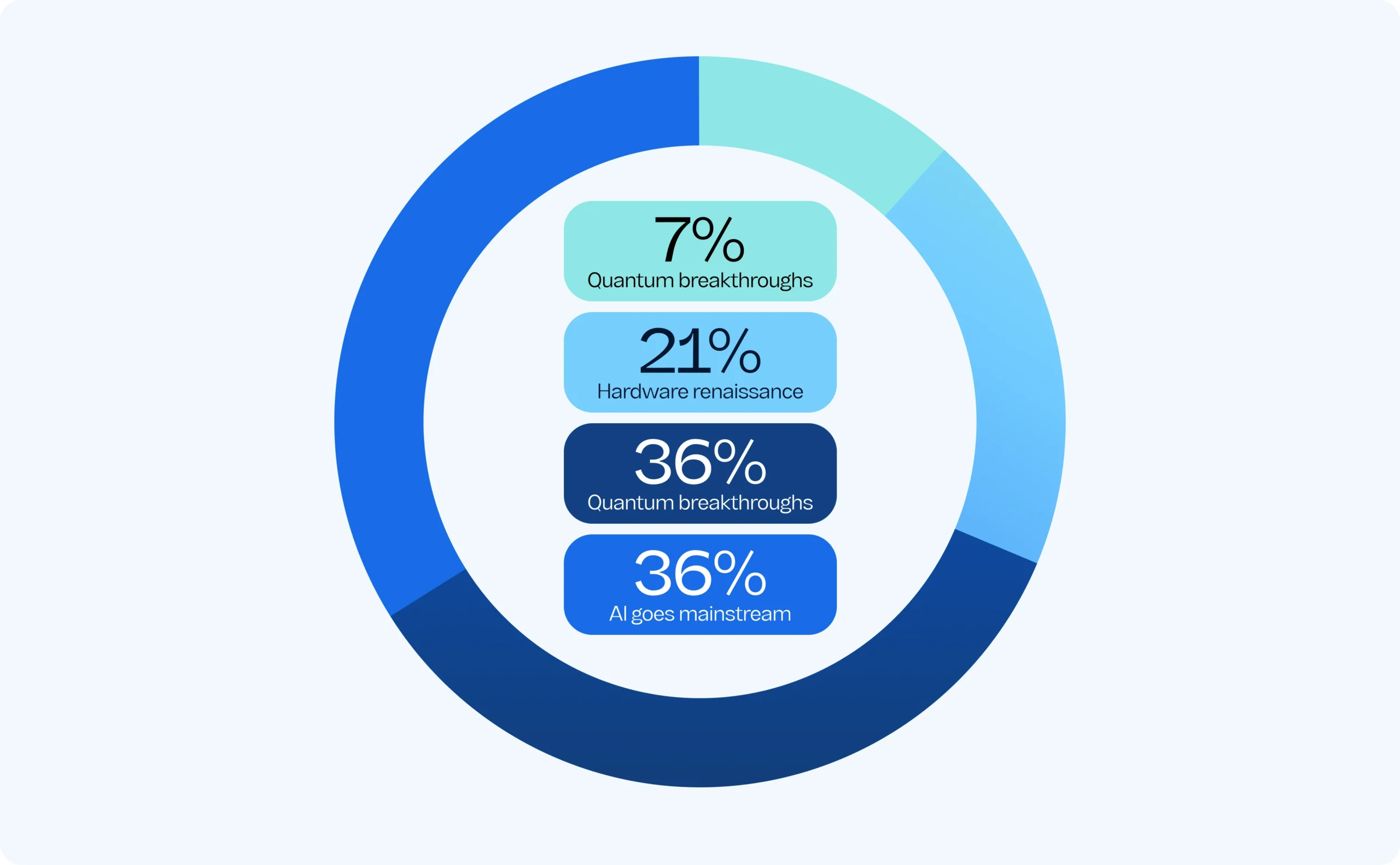
When asked what innovation will have the biggest impact in 2026, respondents were evenly split between two ideas:
AI Goes Mainstream – 36% (of poll respondents)
AI will become deeply integrated and mainstream in everyday life and business, moving beyond niche uses. This widespread adoption of sophisticated, user-friendly AI will fundamentally change workflows, redefine industries, and accelerate innovation.
ChatGPT Surpassing Google – 36% (of poll respondents)
Conversational AI and LLMs are poised to challenge the dominance of traditional search engines like Google. This prediction suggests a fundamental shift where users will favor the direct, human-like, and generative interactions of AI interfaces over link-based search results.
This tie tells us something important: people don’t just expect AI to improve – they expect it to redefine foundational parts of the internet.
2026 is shaping up to be the year AI shifts from tool to infrastructure. AI agents will be embedded in email, browsers, operating systems, and vehicles. The transition from “Open this app” to “Tell your AI to handle it” will accelerate dramatically.
The fact that as many respondents believe “ChatGPT > Google?” as “AI goes mainstream” signals a major cultural shift: people now see AI assistants as a legitimate replacement for the search engine paradigm.
Leon-Anthony Smith, Head of Design
If someone struggles to articulate what they need to a colleague, dropping them in front of an empty textbox won’t magically unlock efficiency. UX is the missing piece. We’ve seen this before – Alexa and Google smart speakers became glorified radios because the interface was too vague and open-ended. The same risk now applies to workplace AI. Real adoption will only happen when companies design clear, guided, thoughtful experiences that help people want to use these tools, not just tick the “we have AI” box. The next big shift won’t be the models – it will be the UX that makes them usable.
This means businesses have to now optimise in a different way to maximise engagement and experiences for their customers and users; searching for and extracting information is becoming increasingly a machine to machine interaction with AI so traditional SEO techniques need to evolve accordingly.
AI is moving from an occasional design aid to a foundational part of how digital products are created, delivered and experienced. At Atomic, we’re already seeing this shift change the role of design: AI isn’t something you bolt on, it’s something you design with. This means thinking about systems, behaviours and interfaces where AI acts as a quiet collaborator in the background: anticipating needs, adapting content, and shaping more personal, fluid experiences for users.
The emergence of conversational AI as a primary way people find information is also reshaping the fundamentals of UX. If users increasingly ask rather than search, the traditional pathways we design such as navigation, content structure, even how brands express themselves will need to evolve. We’re now designing products that must be understandable not just to people, but to AI agents that interpret our content, summarise it, and surface it on behalf of users. This is pushing designers to think beyond screens, layouts and journeys, and towards ecosystems that support both human interaction and machine understanding.
For businesses, the impact is clear: the experiences that win will be those designed to be discoverable, interpretable, and adaptive within an AI-driven digital landscape, but throughout this shift, one thing remains constant, creativity stays human. What AI does is give designers more time to think, imagine, and create work that feels thoughtful, strategic and deeply connected to real user needs.
While the hype cycle of Generative AI has captured the lion’s share of headlines, two other predictions still earned honorable mentions:
Quantum Breakthroughs – 21% (of poll respondents):
A strong minority sees 2026 as the year tangible progress in quantum moves beyond the lab and into real-world application roadmaps.
Hardware Renaissance – 7% (of poll respondents):
While a smaller percentage, the belief that new physical architectures are becoming a critical bottleneck and differentiator is growing.This suggests that while AI dominates the narrative, the industry hasn’t lost sight of foundational technologies.
The most critical progress will be seen in three distinct areas:
Error Correction and Fault Tolerance:
2026 will bring demonstrable breakthroughs in building more stable, logical qubits from noisy physical qubits, a necessary step toward scaling systems.
Near-Term Quantum Advantage:
Instead of waiting for a fully fault-tolerant universal quantum computer, we will see NTQA in specific, highly constrained industry problems.
Industry-Specific R&D Partnerships:
Expect high-profile, strategic R&D partnerships between quantum hardware providers and institutions in finance, advanced materials science, and pharmaceuticals. With spatial computing (AR/VR/MR) maturing, and the migration of AI processing from the cloud to the device (Edge AI), hardware is once again becoming a critical differentiator:
Smarter Spatial Computing Headsets:
Next-generation AR/VR devices will integrate deeper AI processing to offer real-time object recognition, contextual overlays, and intuitive gesture control.
AI-First Computing:
New devices will feature dedicated Neural Processing Units (NPUs) and custom silicon designed from the ground up to efficiently run large language models and sophisticated AI agents locally.
The Internet of Beings:
A step beyond traditional IoT, this refers to sensor networks that understand people as well as devices – capturing real-time behavioural and environmental data to create responsive, personalised digital experiences. Instead of just connecting “things,” it connects people, places, and technology in smarter, more intuitive ways.
Hardware won’t necessarily dominate the market narrative in 2026, but its accelerating progress is fundamentally critical. It is this hardware renaissance that will provide the necessary foundation and physical integration to empower the revolutionary software and AI agents. Hardware won’t define 2026 – but it will unlock the software that does.
Steve Carpenter, Head of Engineering, Atomic
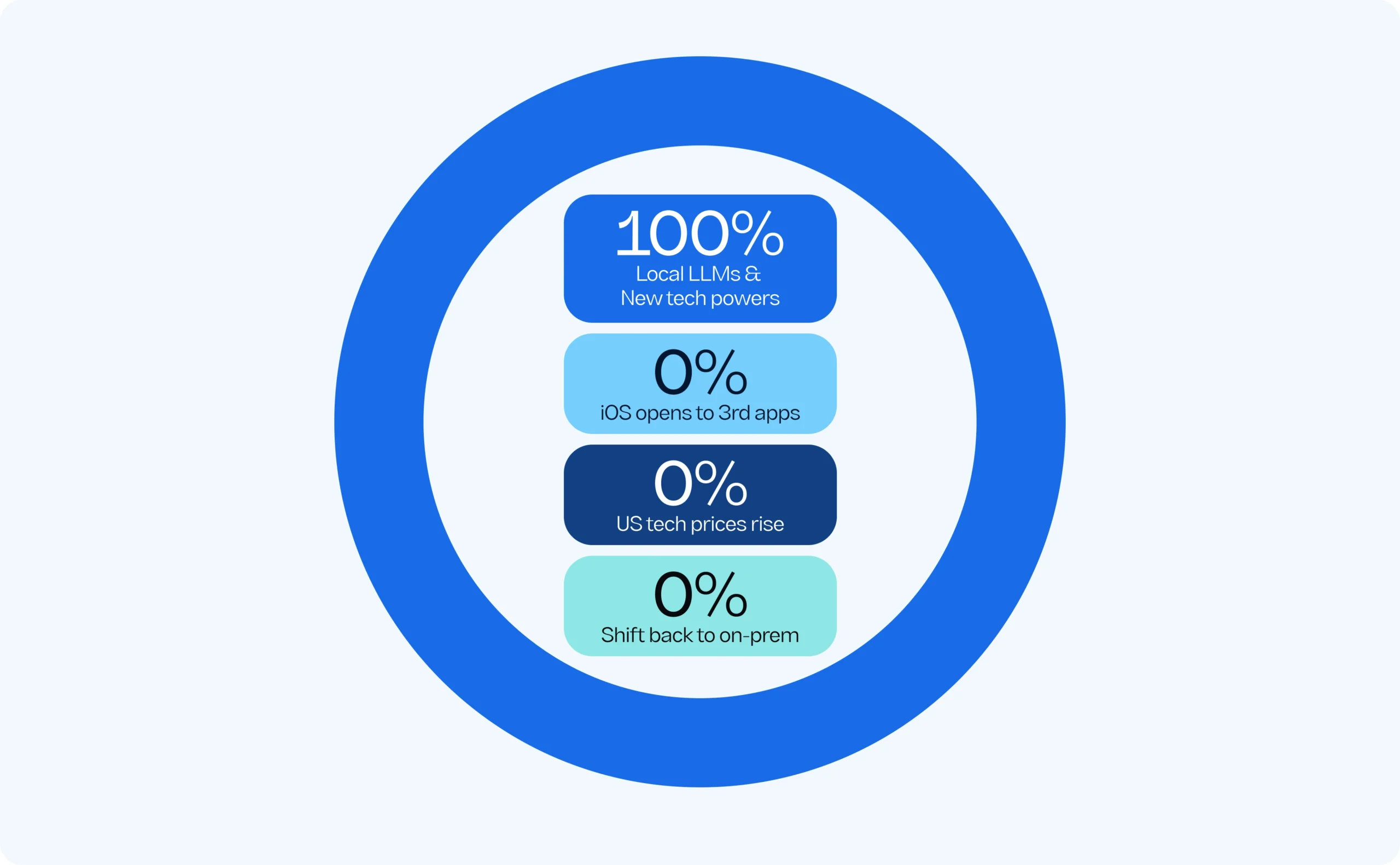
Atomic’s second poll was far less divided. When asked which global shift will matter most in 2026, respondents selected:
Local LLMs and New Tech Power Centers – 100% (of poll respondents): This trend moves away from massive, cloud-dependent AI systems to smaller, more efficient models that can operate on-device (on laptops, smartphones, and local servers). This development is set to revolutionise data privacy and enable AI to be deployed in highly regulated or remote environments. The second, equally important part is the accelerated rise of new global technological and economic superpowers. This includes not only domestic market and manufacturing capability but, critically, ambition and success in AI research and deployment, development of proprietary technological standards, and an increasing influence across global supply chains and digital infrastructure.
Everything else – iOS opening to third-party app stores, US tech price hikes, and a shift back to on-prem data – received 0% of the votes.
This tie tells us something important: people don’t just expect AI to improve – they expect it to redefine foundational parts of the internet. 2026 is shaping up to be the year AI shifts from tool to infrastructure. AI agents will be embedded in email, browsers, operating systems, and vehicles. The transition from “Open this app” to “Tell your AI to handle it” will accelerate dramatically.
The fact that as many respondents believe “ChatGPT > Google?” as “AI goes mainstream” signals a major cultural shift: people now see AI assistants as a legitimate replacement for the search engine paradigm.
Putting these polls together, the story of 2026 becomes clear:
The most important trend isn’t just technological – it’s geopolitical. 2026 may mark the year innovation stops orbiting a single center and instead becomes multipolar.
For businesses, developers, and consumers, this means more choice, more competition, more fragmentation but also more innovation. And for the tech world at large, it means the next era won’t be defined by a single company or country, but by a mosaic of ecosystems rising simultaneously.
If 2024 – 2025 were the years AI exploded, 2026 will be the year the world rewrites the rules around it.
To discuss the opportunities that digital transformation can bring for your organisation in 2026, contact us at [email protected].
Emma Moss is a Senior Product Owner responsible for working with clients (new and existing) to understand their current business landscape, key priorities, drivers and pain points.
Matthew Mirzai is a Tech Lead responsible for setting technical direction, guiding support teams to deliver high-quality, performant software, and collaborating with clients to ensure our solutions align with their business objectives.
EM: My career to date has included a mixture of in-house and consultancy roles, both within the Product space, and also in the world of Quality Assurance. Before joining Atomic, I was part of an in-house product team, but I missed the variety that consultancy life can bring in terms of the people that you work with across different clients, but also the exposure to various technologies and industries. Being a part of Atomic gives me the best of both worlds.
MM: The best times of my career so far have been within consultancies – there’s no beating the mixture of people and experiences which allows learning and creativity to flow – there’s such a wide range of technologies and challenges that every day is different.
EM: My first consultancy role was initially quite daunting. When you work in-house, especially in roles where you have consultancies or third party suppliers delivering for you, the things within your control are very different. Being a part of a consultancy means that a lot more is in your control in terms of delivery, but potentially less control in terms of the product direction. It was apparent to me that there would be more pressure at times, but the pace of delivery is highly rewarding.
MM: I say it a lot to new hires, but the level of technical knowledge at Atomic is fantastic and I’m picking up new things at all levels. It’s been very open and collaborative right from the start.
EM: Working in-house, you have more of a view of the strategic direction of the business and potentially more influence over product direction. However, I’ve found you often have less influence over the delivery approach, especially where third party suppliers or development teams are involved. In-house, things can sometimes take longer to deliver, especially where projects tend to be bigger and involve multiple systems/stakeholders/suppliers.
Working for a consultancy, we are often brought in because of our variety of expertise and our ability to deliver value to end users quickly. We may be asked to focus on smaller increments of a larger deliverable, supplementing existing development teams, or picking up work where the client has limited capacity or competing priorities. I’ve noticed the speed of delivery and flexibility to change direction is greater, and that we have closer working relationships between product & development teams. You also get greater exposure to new technologies, industries & client bases.
MM: In-house work is about deep, long-term product ownership – you often own the product and can work at different timescales, whilst working at a consultancy is about impact and adaptability. Here, you’re constantly shifting context and learning quickly.
EM: It can be intense at times, especially if you are working with multiple clients that are due to deliver key features or releases around the same time, but the variety is one of the reasons why I love working in a consultancy. The breadth of knowledge and experience that you gain is invaluable and transferable between clients, regardless of whether their industries are related. You can often share learnings between clients and become a trusted advisor. That is one of the key reasons why companies choose to work with us.
MM: It keeps things interesting and varied, but context-switching can be challenging. You learn to be more intentional with your time and focus.
EM: Working in a consultancy when you’ve been used to working in-house requires a bit of a mindset shift. Consultancy is all about efficiency and value delivery; our clients choose to work with us for a reason, therefore every hour spent should contribute to our combined success.
MM: I’ve worked in consultancies before, so there weren’t many surprises – but starting over in terms of context wasn’t easy. That learning curve can be steep when you’re coming from in-house development!
EM: Success for me has become more about building good strong working relationships, both internally with my immediate teams, and with our clients. Software projects don’t always go to plan, but having that open and honest partnership means that even challenging projects can feel successful. Everyone pulling in the same direction is what matters to me.
MM: Honestly, I wouldn’t say it’s changed that much. Success is having a good product, a happy customer, and a happy team – the industry or business type doesn’t change.
EM: Adapting to different processes and ways of working, especially when they differ between our clients. Discussing and agreeing on a common way of working up front helps to combat this.
MM: Managing multiple priorities and shifting contexts took some time to get used to again. I had to learn to structure my time more effectively and be more available to my team members, but also to know it’s OK to give myself some time to concentrate on my work.
EM: It’s something that I got used to quite quickly in my previous roles, and I don’t think this is something that is necessarily different between in-house and consultancy roles. In-house, you still may have different deadlines and moving parts to contend with and you might be working with multiple departments or suppliers. Software development is ever changing and adaptability is a key skill!
MM: You have to be disciplined about communication, and make sure both the client and your team mates have clear expectations. There’s also a lot you need to keep in your head at one time, so a notepad has been vital!
EM: It’s quite easy when working in-house to feel quite silo’d. Working in a consultancy is all about collaboration – both internally and externally. It’s quite easy to find your comfort zone too but consultancy often pushes you out of it.
MM: As a Technical Lead, sometimes there was less collaboration than I would have liked at my in-house positions, so I had to relearn how to reach out to others when context was lacking. Asking questions is important at any level and it took some time for me to remember that.
EM: All of the above. Getting stuck into a project helped me quickly learn how Atomic approaches product delivery, and working closely with the engineering team helped to gain wider context about how we best utilise tools and best practices. Everyone at Atomic has been really supportive and is constantly striving for improvement; being employee owned means we are all fully invested in what we do.
MM: The support network here makes a huge difference – I mentioned focus time before, and we all try to give ourselves time to get our heads down. But at the same time everyone is open to talking through a problem, or pointing others in the right direction. Great teams build great products, and everyone’s focus is always on the team’s progress.
EM: In the short term it’s challenging, especially when working with new clients or industries, but once you’re up to speed, it’s more about effectively managing your time. Trying to include time within the week to keep focused on specific projects helps – this approach often helps to avoid too much context switching in a short space of time.
MM: I’ve always told anyone that’s joining a consultancy that ‘context is king’, and at the heart of that is good documentation. Onboarding to different clients needs to be a quick but deep process, and we ensure new developers on these projects have the tools and guidance they need for this to be smooth.
EM: Collaborating with clients is more focused around the product scope and progress; uncovering requirements & refinements, communicating progress, and working together to unblock challenges. Working with an internal product team is often more about negotiation; prioritising people and allocation of resources, managing deadlines & dependencies, and also more around knowledge sharing and continuous improvement of our ways of working.
MM: There’s more emphasis on building trust and communicating clearly with clients. You often have to adapt your style depending on the audience.
EM: Conversations and documentation are key! I really enjoy getting people together (physically or virtually), asking lots of questions, and asking them to “show and tell”; show us what you’ve got today, and tell us where you think we could make your lives easier. The most important thing from this is then documenting the outputs.
MM: Early discovery sessions are key to building a shared understanding – you want to get those questions in early, and having a constant point of contact helps with that.
EM: There really is no one size fits all approach. Each client will have their own priorities and pressures, so part of my role is to understand this and translate this back to our internal team members. It’s about building trust, being transparent, and setting clear expectations. The most important thing for me is that we feel and act like we are one team.
MM: Transparency is everything – even small updates build trust – and there has to be a two way street of communication between us and the clients. I’ve also learned to tailor technical discussions for different audiences.
EM: I am more conscious of how I communicate, and ensuring that I understand what level of communication each client needs in order to be successful in their own roles. I love to get to know the people I’m working with, and I try to maintain that regardless of who I’m working with. Making time for ‘small talk’ is something I really enjoy, and bringing that human aspect to work is really important.
MM: Most developers are introverts, but I feel it’s important that someone with a technical background is on those meetings with clients when talking through the work being done. I’m glad to be able to speak to clients on a regular basis in my role.
EM: Learning and accepting that sometimes things are not fully within my control, and that it’s not always possible to influence product direction or priorities.
MM: The ability to adapt quickly to new industries and technologies – just through the number of different solutions, you’re going to always be learning.
EM: The breadth of industries and technologies that you are exposed to is incredible, and no two weeks are the same. My background has predominantly been in retail and ecommerce, but since joining Atomic, I’ve worked closely with clients and products in industries such as manufacturing, water treatment and aerospace. It has made me even more adaptable, but also helped me to identify and bring consistency to our Discovery processes.
MM: I cannot emphasise enough how much you will grow as a developer within a consultancy like Atomic. You learn so much through working with different developers in different environments – things change so quickly it’s impossible not to learn something new every day.
EM: I am more conscious about how and where our time is spent, ensuring that we provide value to our clients. What we do is often quite bespoke in nature, and there is a need for continuous learning and improvement. I am really appreciative of the fantastic engineers that we have within Atomic; they teach me something new on a regular basis!
MM: The ‘right’ way depends on the client, the team, and the problem – there is no universal solution. You need to ingrain yourself within the client’s context, and really think about what they need before you can create something effective.
EM: The feeling when you hear clients talking about how much they love a product that you and your team have developed, or seeing products that you and your teams have delivered coming to life really makes it all worthwhile!
MM: Coming back to an environment where you just learn through osmosis has been good – there’s always someone doing something interesting who you can talk to and learn. There’s also plenty of opportunities to be involved in those interesting things yourself.
EM: Be a sponge. Be adaptable. Whilst it can be a big step change from what you’re used to, focus on the relationships that you have with your team. The consultancy environment can be challenging, but so rewarding, and for professional development probably one of the best experiences you will have.
MM: Expect and embrace the learning curve – this kind of environment is not for everyone (and there’s nothing wrong with that), and getting used to things can take time. As long as you are open to the change and allow yourself to be flexible (and ask lots of questions!) you’ll be well on your way.
EM: It’s really important to remember that your clients will be looking to you for advice and guidance, and to be the person to provide different perspectives. Not being afraid to ask lots of questions (including the silly ones), but also not being afraid to question why we are going in a certain direction, as well as understanding the needs and wants of your clients will stand you in good stead.
MM: You need to be self driven, as we’re seen as the experts and need to drive change for the clients. This only comes from understanding both the technical and product sides, and this has to come from the individual. Organisation is also key – you are going to be switching contexts a lot.
EM: It takes time to adapt to any new environment. Patience is key!
MM: Less ‘wish-I’d-known’ and more ‘wish-I-hadn’t-forgot’ – there are so many approaches to even simple problems and you need to understand the reasoning behind why things have been done a certain way.
EM: The new experiences that every day brings have really helped me to advance in my career. I love it!
MM: As mentioned, it’s a steep learning curve – but the professional and personal outcomes are fantastic.
If you’re interested in making the move to a tech consultancy, take a look at our current open roles here.
At Atomic, we’ve always been committed to innovation – not just in the award-winning tech we build, but also in how we run our business.
At the end of 2023, we took a bold and exciting step by transitioning to an employee ownership model. This decision reflects our belief that great businesses thrive when their people are truly invested in their success.
Here’s why we made the change, what we’ve learned so far, and how it’s already making a huge difference for our team and clients.
Since Atomic was founded in 1999, it has always been a people-centric organisation. Our business relies on our culture of collaboration, creativity and a shared drive for excellence. Early in 2023, as we were approaching our 25th anniversary, we started looking to the future and did a lot of thinking around what we wanted the company to become. We’d already achieved so much more than we’d expected and we realised that we’d only been able to do that through the hard work, dedication and teamwork of our people. We’ve got a special culture at Atomic and we decided we wanted to preserve that spirit for as long as possible. So we started looking at ways we could ensure Atomic continues to thrive, not just for the next 25 years but well beyond our 100th anniversary.
Creating such a lasting legacy is very rare, and often only happens in family owned businesses such as JCB, who we know very well. More often than not, successful businesses get acquired, merged or sold to new owners who have a different set of objectives and principles to those of the original founders. We have seen many examples where this has resulted in a detrimental impact on the culture and quite often the performance of the acquired business. As we reflected on reaching such a significant milestone, we wanted to set Atomic on a different path for the next stage of our journey.
In order for a business to survive in the long run it needs to evolve, adapt and innovate to stay relevant in an ever changing world. No one knows our business better than the people who work here, and no one is more in tune with the latest trends in the tech industry than our people who are working with it every day. So as we looked to the future we recognised we needed to be developing and nurturing our leaders of tomorrow.
We also recognised the contribution that our employees make, and wanted to give something back to reward them for getting us to where we are today. The employee ownership model not only does this, but it also offers so much more…
Preserving our culture
Employee ownership ensures our values and ethos remain at the heart of the business.
Empowering our team
By giving everyone a direct share in Atomic’s success, we’re fostering a stronger sense of accountability and pride.
Attracting and retaining talent
We believe that ownership makes Atomic a more attractive place to work, helping us continue to attract the best talent in the industry.
Leadership pathways
This model creates real opportunities for the next generation of future leaders.
Client partnership focus
With employees personally invested in our success, our commitment to client satisfaction is stronger than ever.
By taking this approach we are making a bold statement that we value our independence and we want our success to be driven by our own people. I strongly believe that this will lead to sustainable growth in the long term.
While on the surface not a huge amount has changed, since transitioning to employee ownership there has been a palpable shift in mindset throughout the organisation and there is a real sense of collective responsibility. We’ve seen the team come together in remarkable ways, whether that’s by taking the initiative to make incremental improvements to our tooling and processes or banding together in the face of adversity and coming up with solutions that move the company forwards.
Whenever we’ve hit a setback, the team has proactively worked together to own the problem and find a way. I’ve noticed this happening at all levels, whereas previously it would often fall on the directors to figure our way out of a crisis.
Our clients have fed back positively too… even before we announced the transition, several clients noticed Atomic teams going above and beyond to ensure their projects were not just delivered successfully but exceeded expectations. This is something we’ve always done at Atomic, but the difference now is that people do it without being asked to. It has just become the way we do things.
The new model has certainly proved to be a key differentiator in terms of recruitment, and we are now getting multiple high calibre candidates applying for every role. As we continue to grow this will become increasingly more valuable over time.
While it is too early to say for certain that our transition to employee ownership will give us the outcomes we are looking for in the long term, having completed our first year under the new model and achieved our best ever set of results, the early indications are definitely positive.
We believe the employee ownership model makes Atomic a truly unique company and a standout partner for clients for a number of reasons.
A thriving team culture
Ownership creates a sense of pride and unity, encouraging everyone to contribute their best ideas and efforts. Combined with our Deliver & Equip ethos, this ensures our clients get the highest level of service.
Long-term stability
Employee ownership secures Atomic’s independence and stability for the future, giving clients confidence in our ability to remain a trusted partner.
Enhanced client relationships
With every team member invested in success, our clients benefit from a proactive, motivated team that treats their projects as if they were our own.
The transition to employee ownership is more than a structural change – it’s a commitment to our team, our clients, and the future of Atomic. We’re already seeing the positive impact, and we’re excited about the opportunities this model will bring as we continue to grow.
Whether you’re looking for an innovative digital partner that’s here for the long haul, or a workplace that empowers its people, join Atomic on our ownership-driven journey to sustainable growth.
If you’d like to learn more about our journey or how we can help your business thrive, get in touch – we’d love to chat.
In the UK Government’s recent ‘2022 Cyber Security Breaches Survey’ it was found that 39% of UK businesses had identified a cyber attack in the last 12 months; with a worrying 31% of businesses estimating they were attacked at least once a week.
With ever more sophisticated criminals targeting UK businesses on a daily basis, it’s vital that companies protect themselves from these attacks; but it’s not something that leaders can do in isolation. Having been fortunate enough to have worked with hundreds of clients over the years, in our experience, good security starts with a good security culture. People will always be the weakest link in a company’s security defences – you can have the best firewalls and physical security, but if an employee tells another person their password you’ve potentially let someone straight in.
If you’re responsible for the cyber approach in your business, we would recommend you follow these 5 steps to ensure your protect you data and systems from attacks:
The first step is to get buy-in from the Exec board. It’s important that business leaders understand the repercussions of a data breach, so starting with the Exec board is the first step on the road to embedding good security into your company’s culture. Highlight recent examples to illustrate that the risk is real and any company can be vulnerable.
Company-wide ‘Show & Tells’ or learning lunches can be a great way to educate staff, make sure everyone is aware of the issue and show that security is high on the company’s agenda.
Provide all staff with the knowledge and skills they need to protect themselves and your company from potential threats and prepare them to respond in the right way, should an event occur.
Cyber attacks are a very real threat for all businesses today. It’s becoming increasingly more likely that you could fall victim, so don’t just hope for the best – regularly test your defences. You could set up simulated phishing and social engineering attacks for your staff, or test through random quizzes. This will make sure the issue is always in the minds of your employees and becomes embedded in the culture of your company.
People love a competition and often learn best when they put their skills into practice, so making it fun is a great way to get employees on board. Perhaps you could start a leaderboard to encourage the right behaviours?
Gamifying cyber security training certainly helped our client Dentons to embed best-practice cyber security protocols into their culture and that of their customers. Dentons, the world’s largest law firm, approached us to help them combat the increasing threat they and their customers were facing from cyber attacks. This resulted in us developing the world’s first gamified cyber-security training app for them to train and test their employees, using realistic simulated data-breach scenarios.
The app makes use of gaming principles to lead an employee through a real-world cyber-security scenario before giving the player a score and feedback based on their response times and decisions. Taking something that was considered a fairly dry subject in the past, we were able to transform it into a hot topic throughout the organisation, dramatically increasing staff knowledge within just one week. This ultimately resulted in the organisation becoming much more secure and resilient to cyber attacks in the future.
If you’d like advice on how to ensure your business is protected from cyber attacks, please do not hesitate to get in touch and we’d be happy to help.
Our Head of People, Rob Curley, recently chatted with Lawrence Belle, Junior Web Developer to find out what prompted him to get into web development and to learn a bit about his Atomic journey to date.
I started working at Atomic during the early part of 2023.
My academic background lies in mathematics. I’ve always taken to maths and its structural methodology. This spans from completing my maths GCSE a year early to getting a maths degree at the University of Nottingham.
During my time at university, I took scientific computation modules which required me to teach myself some basic programming to solve problems. I found myself drawn to this and I continued to teach myself how to program in my free time. I would become more and more invested in this hobby and as my time at university came near to a close I knew I wanted to make it a career.
I then searched online for local software agencies since I knew I wanted to work with and learn from software specialists with a broad range of skills. This is when I found Atomic and upon learning about their work culture and impressive client list, it was only natural that I wanted to be a part of the company.
In my role as a Junior Web Developer, it is my responsibility to translate the desires of the customer into something actionable, and eventually code with the assistance of my peers.
This makes the developer role the focal point of software creation, incorporating ideas from the design, client services, and QA team to finalise a product.
I enjoy creating solutions to the customer’s requirements, constantly giving me the chance to learn new methodologies and technologies, while ensuring that my code is both easy to understand and reuse so the rest of the team can easily collaborate on it.
With Atomic being such a great place to learn and develop my skills, I see myself only becoming a better and more reliable developer. Experience can mean everything with a role like this, and with Atomic’s client list, there is no shortage of experience to be had.
The developer role itself I only see becoming more important as we continue to depend on technology, and it seems like there is no better time than now to learn how to harness the strengths of AI!
The team and culture at Atomic are amazing. You definitely feel the support of everyone here as they only want what is best for you. Being able to work for large brands helps make your work feel substantial and the perk of being able to work remotely even in a junior role is very much appreciated as well.
I enjoy rock climbing in my spare time. It’s really fun being able to pour all your focus into a seemingly simple task with lots of small intricacies and complexities. It’s not always obvious how to get to the top of the wall and so climbing calls on your problem solving skills, and past that some climbs ask for a lot of physical effort.
Climbing has a super friendly community and so you often find yourself sparking up conversations and working together with other climbers to help each other figure out the climb. It also helps that there is a climbing gym so close to the Atomic office.
When I wrote my first lines of code during GCSE computing I was really not a fan of it. I was very much of the opinion that I would never do it in any serious capacity. Fast forward 10 years or so, and I’ve really grown to love it. I am only enjoying my time developing more and more as time goes on.