


4 Sep 2026


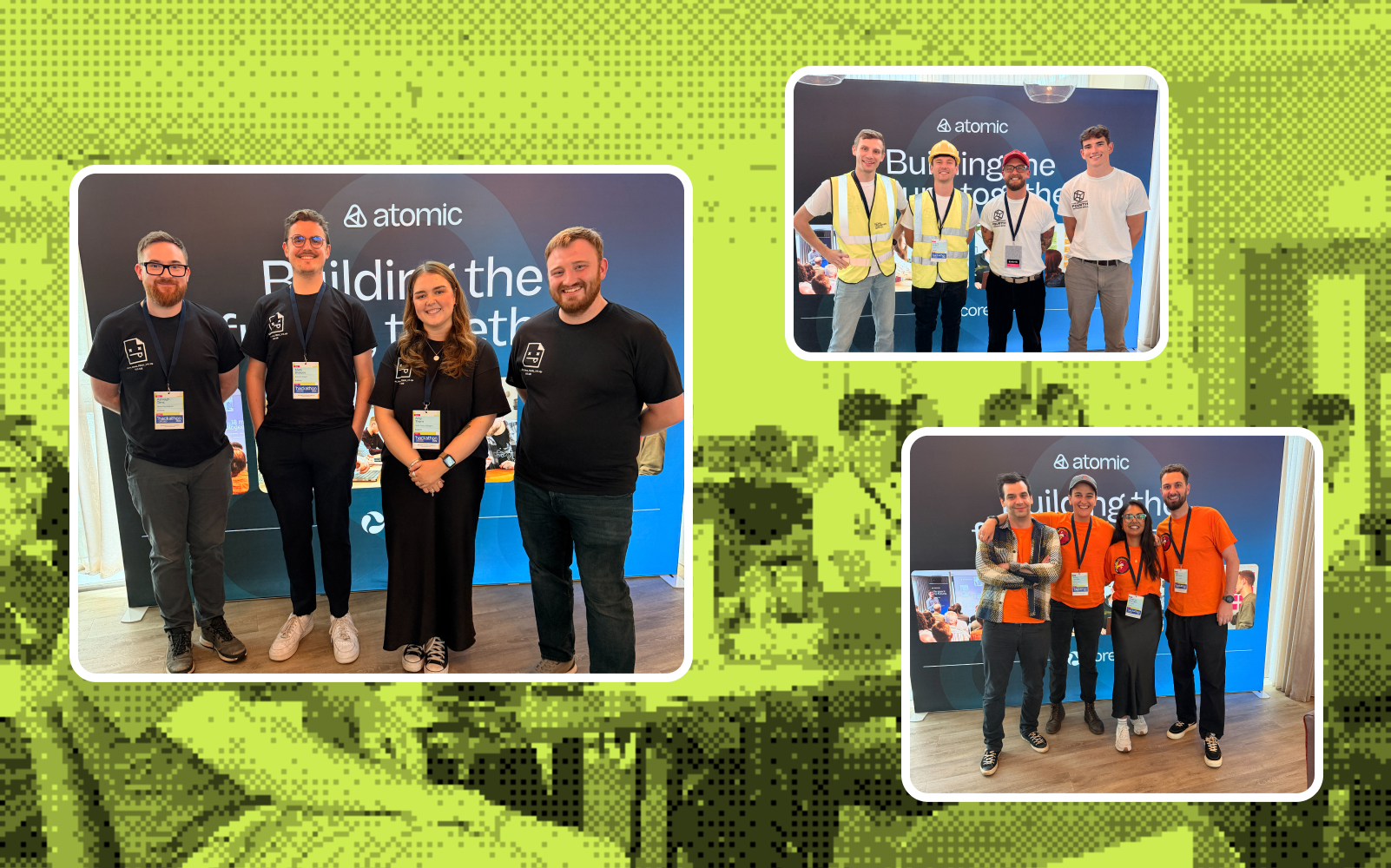
The floodgates of creativity swung wide open in the last week of August as teams from design, engineering, product, and delivery locked in for Atomic’s 5th annual hackathon. The two day event was centered around a single theme, ‘Intelligence in the real world’ .
Historically, a 2 day hackathon might have produced an impressive concept, a polished mockup or a basic prototype. This time around, with AI accelerating the routine mechanics, our teams spend two intensive days grappling much bigger challenges and developing feature-packed solutions to real world problems.
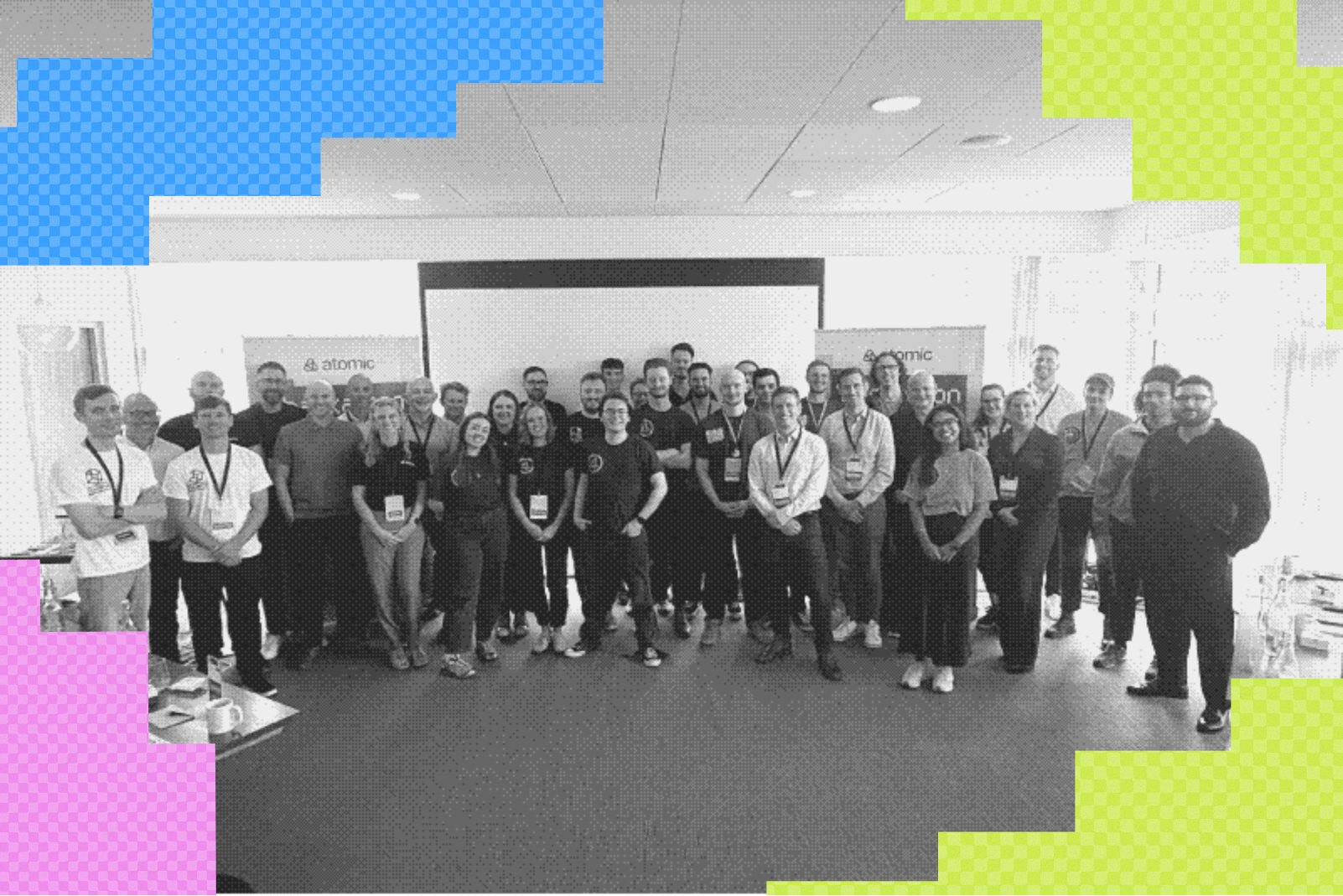
Rather than setting hypothetical briefs, we invited clients from across the manufacturing, automotive, construction, and leisure industries to put forward genuine challenges encountered within their businesses.
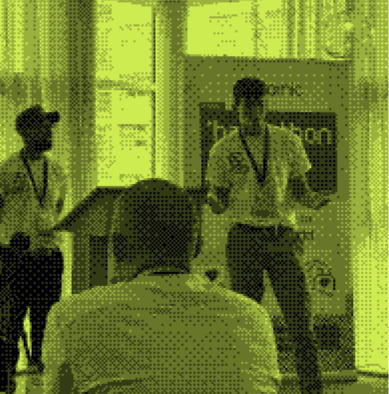
The parameters were simple: Teams had one and a half days to come up with a solution and build a working prototype, with no restrictions on the technology they could use. This was followed by a live demonstration to our judging panel of industry experts, who scrutinised each idea and put the teams’ technical and commercial thinking to the test.
We structured the event around an evaluation matrix across four distinct categories:
Feasibility & Technical Execution
Evaluates the technical craft, working reality, and practical viability of the solution.
Innovation & Creativity
Measures the originality of the concept, the use of innovative technologies, and how creatively technology was applied.
Business Impact Potential
Assesses the commercial viability of the solution and the tangible value it creates for target business clients.
Presentation & Demo
Evaluates how effectively the team articulates their vision and demonstrates their build.
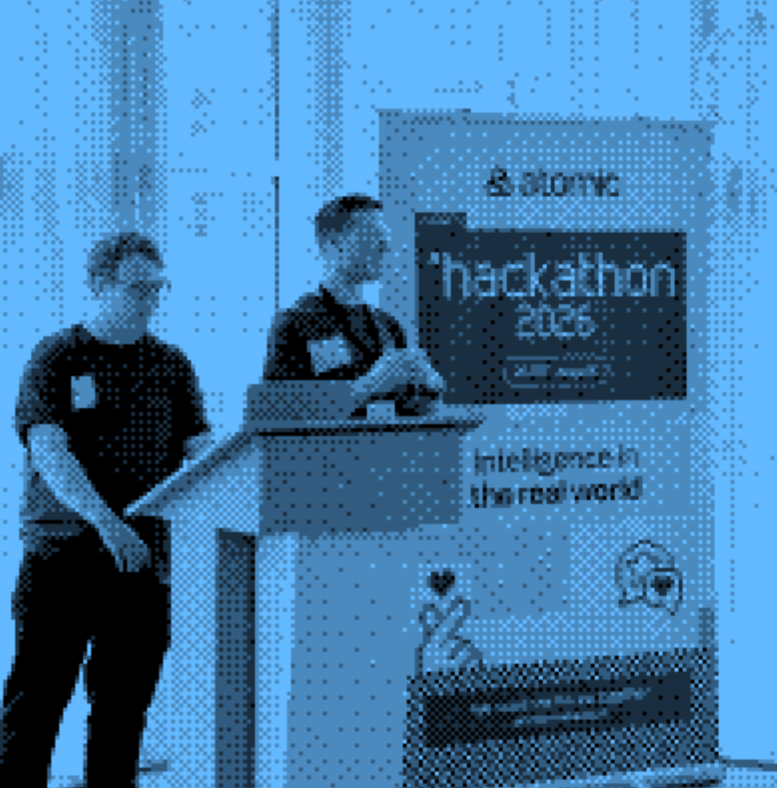
When the clock started, each of our five multidisciplinary teams had just 36 hours to solve their challenge and turn their ideas into a convincing working prototype.
Day 1
Teams spent 24 hours (fueled by pizza and copious amounts of coffee) mapping data schemas, training localised models, designing interfaces and building out functionality.
Day 2
Teams arrived early at the event space and used the morning session to finalise their builds and rehearse their presentations. The afternoon saw each team present a live demonstration of their solution with a time limit of 20 minutes plus time for Q&A from our judges.
An executive judging panel evaluated the technical and strategic readiness of the final applications with the prize of an extra day’s holiday on offer for each of the winning team. With representatives from Center Parcs, JCB, Jaguar Land Rover, Workdry and Laing O’Rourke, the bar was very high.
RAG to Riches
The Challenge: Smart house keeping
How might we create an intelligent, hands-free housekeeping system that uses occupancy information and live operational data to coordinate teams more effectively?
The Solution
Sweep is an automated scheduling and live monitoring system optimised for holiday park changeover days. During planning, Sweep executes algorithmic scenario modeling to establish the most efficient use of staff hours to maximize property readiness. On live changeover days, the platform combines physical in-lodge sensors with a hands-free staff application to give resort operations managers real-time visibility into lodge clean status, in-progress turnarounds, or delayed properties.
Quantifiable Impact
The Flying Hackfish
The Challenge: Will it fit?
How might we create an intelligent map that only shows car parks suitable for a driver’s specific vehicle?
The Solution
Ample uses computer vision to automate vehicle sizing. By processing a single mobile photo of a vehicle, the application calculates precise spatial dimensions—dynamically accounting for temporary add-ons like roof boxes or bike racks. It references these dimensions against localised parking facility space data to provide drivers with a confidence rating prior to arrival that their car will fit.
Quantifiable Impact
Farmer's Four
The Challenge: Virtual Concierge and Booking Agent
How might we create an AI concierge that proactively calls guests, understands their needs, and helps them discover and book relevant activities through a natural conversation?
The Solution
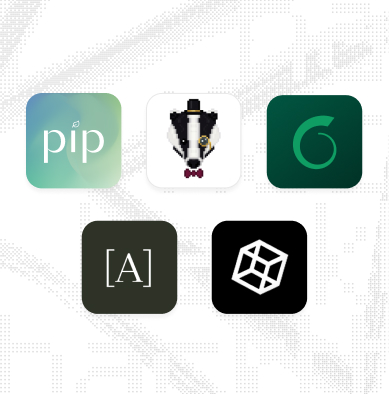
Pip is an AI concierge for the leisure industry, which aims to take the cognitive load of planning away from the guest. Guests can speak naturally to Pip to explore and book things to do, with Pip giving personalised recommendations based on guest data whilst avoiding itinerary clashes. Pip is designed with zero-UI in mind, leveraging conversational AI for a hands-free frictionless experience.
Quantifiable Impact
The Fourth Wall
The Challenge: Vision AI for Construction
Wildlife Monitoring – How might we use AI-enabled cameras to understand what is happening on a construction site and provide useful, timely insights – without continuously sending video to the cloud?
The Solution
Fourth Wall is a dashboard for construction site managers, which aggregates site camera’s, and uses AI trained models to detect what those cameras see. This allows site managers to produce automated reports on progress and receive/view alerts based on certain events. During a live demo the team demonstrated using an AI model to detect PPE, triggering an alert to the dashboard when this was missing. This showcased how AI models can detect events locally, and only send data to the cloud when required.
Quantifiable Impact
Team_Name_FINAL_V4.zip
The Team
Ashleigh Sims, Mark Dickson, Joe Griffin, Amy Thorn
The Challenge: Wildlife Monitoring
How can we increase the efficiency of environmental monitoring teams by continuously monitoring and analysing sensor and video feeds to detect animal populations, flag invasive species, map density hotspots in real time, and measure ecosystem recovery?
The Solution
That’s the Badger is an environmental analytics platform engineered to handle sparse, low-resolution, or low-light video records rather than static photography. It uses an active human-in-the-loop validation layer: when the system encounters highly ambiguous wildlife behavior, it flags the clip for rapid manual verification, which immediately retrains the localised model to improve subsequent autonomous accuracy.
Quantifiable Impact
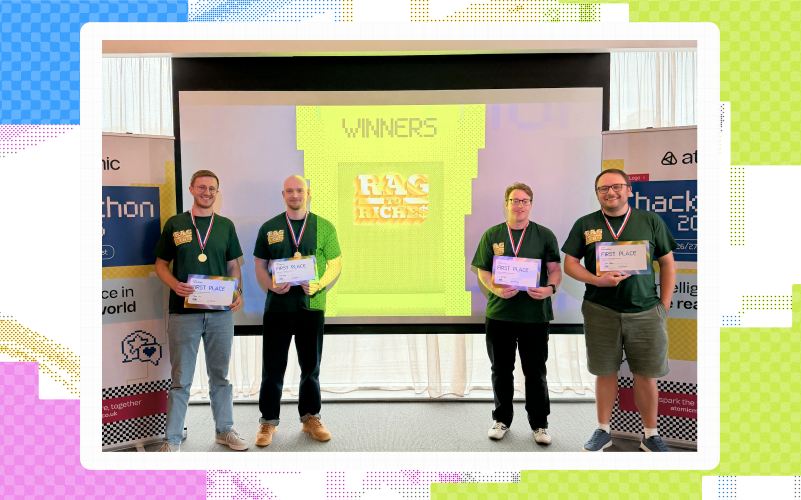
The competition was exceptionally close, with less than a single mark separating the top two entries – a reflection of the calibre of execution across all the teams. Ultimately, RAG to Riches took first place with Sweep, its intelligent housekeeping platform.
The judging panel was unanimous in its praise for Sweep’s commercial promise and ability to scale across large resorts, international hotel groups and cruise lines. The judges were equally impressed by the breadth and technical complexity of the working solution the team had built in just a day and a half.
While Sweep took the top prize, the quality, creativity and sheer effort demonstrated across every entry made this our strongest hackathon yet. And the work will not end here: we’re already exploring how selected prototypes could be refined, developed and potentially deployed in partnership with our clients.
The hackathon demonstrated what becomes possible when multidisciplinary teams combine deep expertise, operational freedom and the right tools. Given real business problems to solve – and the autonomy to decide how – they created five functional applications using real data and third-party APIs in less than 36 hours.
AI played an important role in that pace, accelerating routine development work and allowing the teams to spend more time on architecture, integration, user experience and commercial viability. But the technology was only part of the story. The quality of the results came from experienced people working closely together, making good decisions and turning ambitious ideas into working software.
If your organisation is looking to move past generic AI hype and test how technology could address a complex operational problem, we can help you explore it through focused rapid-prototyping. We can also consider suitable problem statements as challenges for a future Atomic technical build event.
Interested in joining an employee-owned digital consultancy that values deep engineering capability and straightforward collaboration? We are always looking for talented people, view our open roles on our careers page.