

27 Nov 2025


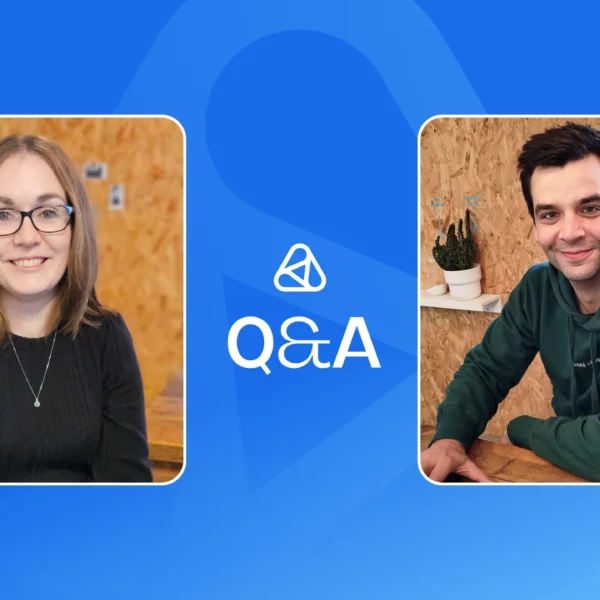
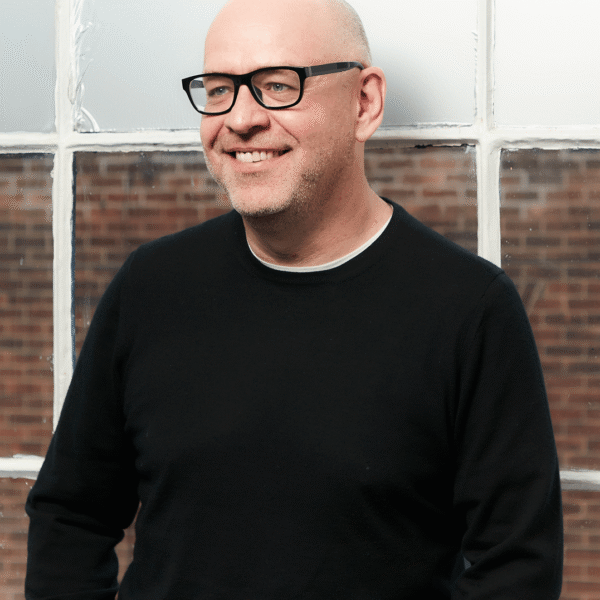
Emma Moss is a Senior Product Owner responsible for working with clients (new and existing) to understand their current business landscape, key priorities, drivers and pain points.
Matthew Mirzai is a Tech Lead responsible for setting technical direction, guiding support teams to deliver high-quality, performant software, and collaborating with clients to ensure our solutions align with their business objectives.
EM: My career to date has included a mixture of in-house and consultancy roles, both within the Product space, and also in the world of Quality Assurance. Before joining Atomic, I was part of an in-house product team, but I missed the variety that consultancy life can bring in terms of the people that you work with across different clients, but also the exposure to various technologies and industries. Being a part of Atomic gives me the best of both worlds.
MM: The best times of my career so far have been within consultancies – there’s no beating the mixture of people and experiences which allows learning and creativity to flow – there’s such a wide range of technologies and challenges that every day is different.
EM: My first consultancy role was initially quite daunting. When you work in-house, especially in roles where you have consultancies or third party suppliers delivering for you, the things within your control are very different. Being a part of a consultancy means that a lot more is in your control in terms of delivery, but potentially less control in terms of the product direction. It was apparent to me that there would be more pressure at times, but the pace of delivery is highly rewarding.
MM: I say it a lot to new hires, but the level of technical knowledge at Atomic is fantastic and I’m picking up new things at all levels. It’s been very open and collaborative right from the start.
EM: Working in-house, you have more of a view of the strategic direction of the business and potentially more influence over product direction. However, I’ve found you often have less influence over the delivery approach, especially where third party suppliers or development teams are involved. In-house, things can sometimes take longer to deliver, especially where projects tend to be bigger and involve multiple systems/stakeholders/suppliers.
Working for a consultancy, we are often brought in because of our variety of expertise and our ability to deliver value to end users quickly. We may be asked to focus on smaller increments of a larger deliverable, supplementing existing development teams, or picking up work where the client has limited capacity or competing priorities. I’ve noticed the speed of delivery and flexibility to change direction is greater, and that we have closer working relationships between product & development teams. You also get greater exposure to new technologies, industries & client bases.
MM: In-house work is about deep, long-term product ownership – you often own the product and can work at different timescales, whilst working at a consultancy is about impact and adaptability. Here, you’re constantly shifting context and learning quickly.
EM: It can be intense at times, especially if you are working with multiple clients that are due to deliver key features or releases around the same time, but the variety is one of the reasons why I love working in a consultancy. The breadth of knowledge and experience that you gain is invaluable and transferable between clients, regardless of whether their industries are related. You can often share learnings between clients and become a trusted advisor. That is one of the key reasons why companies choose to work with us.
MM: It keeps things interesting and varied, but context-switching can be challenging. You learn to be more intentional with your time and focus.
EM: Working in a consultancy when you’ve been used to working in-house requires a bit of a mindset shift. Consultancy is all about efficiency and value delivery; our clients choose to work with us for a reason, therefore every hour spent should contribute to our combined success.
MM: I’ve worked in consultancies before, so there weren’t many surprises – but starting over in terms of context wasn’t easy. That learning curve can be steep when you’re coming from in-house development!
EM: Success for me has become more about building good strong working relationships, both internally with my immediate teams, and with our clients. Software projects don’t always go to plan, but having that open and honest partnership means that even challenging projects can feel successful. Everyone pulling in the same direction is what matters to me.
MM: Honestly, I wouldn’t say it’s changed that much. Success is having a good product, a happy customer, and a happy team – the industry or business type doesn’t change.
EM: Adapting to different processes and ways of working, especially when they differ between our clients. Discussing and agreeing on a common way of working up front helps to combat this.
MM: Managing multiple priorities and shifting contexts took some time to get used to again. I had to learn to structure my time more effectively and be more available to my team members, but also to know it’s OK to give myself some time to concentrate on my work.
EM: It’s something that I got used to quite quickly in my previous roles, and I don’t think this is something that is necessarily different between in-house and consultancy roles. In-house, you still may have different deadlines and moving parts to contend with and you might be working with multiple departments or suppliers. Software development is ever changing and adaptability is a key skill!
MM: You have to be disciplined about communication, and make sure both the client and your team mates have clear expectations. There’s also a lot you need to keep in your head at one time, so a notepad has been vital!
EM: It’s quite easy when working in-house to feel quite silo’d. Working in a consultancy is all about collaboration – both internally and externally. It’s quite easy to find your comfort zone too but consultancy often pushes you out of it.
MM: As a Technical Lead, sometimes there was less collaboration than I would have liked at my in-house positions, so I had to relearn how to reach out to others when context was lacking. Asking questions is important at any level and it took some time for me to remember that.
EM: All of the above. Getting stuck into a project helped me quickly learn how Atomic approaches product delivery, and working closely with the engineering team helped to gain wider context about how we best utilise tools and best practices. Everyone at Atomic has been really supportive and is constantly striving for improvement; being employee owned means we are all fully invested in what we do.
MM: The support network here makes a huge difference – I mentioned focus time before, and we all try to give ourselves time to get our heads down. But at the same time everyone is open to talking through a problem, or pointing others in the right direction. Great teams build great products, and everyone’s focus is always on the team’s progress.
EM: In the short term it’s challenging, especially when working with new clients or industries, but once you’re up to speed, it’s more about effectively managing your time. Trying to include time within the week to keep focused on specific projects helps – this approach often helps to avoid too much context switching in a short space of time.
MM: I’ve always told anyone that’s joining a consultancy that ‘context is king’, and at the heart of that is good documentation. Onboarding to different clients needs to be a quick but deep process, and we ensure new developers on these projects have the tools and guidance they need for this to be smooth.
EM: Collaborating with clients is more focused around the product scope and progress; uncovering requirements & refinements, communicating progress, and working together to unblock challenges. Working with an internal product team is often more about negotiation; prioritising people and allocation of resources, managing deadlines & dependencies, and also more around knowledge sharing and continuous improvement of our ways of working.
MM: There’s more emphasis on building trust and communicating clearly with clients. You often have to adapt your style depending on the audience.
EM: Conversations and documentation are key! I really enjoy getting people together (physically or virtually), asking lots of questions, and asking them to “show and tell”; show us what you’ve got today, and tell us where you think we could make your lives easier. The most important thing from this is then documenting the outputs.
MM: Early discovery sessions are key to building a shared understanding – you want to get those questions in early, and having a constant point of contact helps with that.
EM: There really is no one size fits all approach. Each client will have their own priorities and pressures, so part of my role is to understand this and translate this back to our internal team members. It’s about building trust, being transparent, and setting clear expectations. The most important thing for me is that we feel and act like we are one team.
MM: Transparency is everything – even small updates build trust – and there has to be a two way street of communication between us and the clients. I’ve also learned to tailor technical discussions for different audiences.
EM: I am more conscious of how I communicate, and ensuring that I understand what level of communication each client needs in order to be successful in their own roles. I love to get to know the people I’m working with, and I try to maintain that regardless of who I’m working with. Making time for ‘small talk’ is something I really enjoy, and bringing that human aspect to work is really important.
MM: Most developers are introverts, but I feel it’s important that someone with a technical background is on those meetings with clients when talking through the work being done. I’m glad to be able to speak to clients on a regular basis in my role.
EM: Learning and accepting that sometimes things are not fully within my control, and that it’s not always possible to influence product direction or priorities.
MM: The ability to adapt quickly to new industries and technologies – just through the number of different solutions, you’re going to always be learning.
EM: The breadth of industries and technologies that you are exposed to is incredible, and no two weeks are the same. My background has predominantly been in retail and ecommerce, but since joining Atomic, I’ve worked closely with clients and products in industries such as manufacturing, water treatment and aerospace. It has made me even more adaptable, but also helped me to identify and bring consistency to our Discovery processes.
MM: I cannot emphasise enough how much you will grow as a developer within a consultancy like Atomic. You learn so much through working with different developers in different environments – things change so quickly it’s impossible not to learn something new every day.
EM: I am more conscious about how and where our time is spent, ensuring that we provide value to our clients. What we do is often quite bespoke in nature, and there is a need for continuous learning and improvement. I am really appreciative of the fantastic engineers that we have within Atomic; they teach me something new on a regular basis!
MM: The ‘right’ way depends on the client, the team, and the problem – there is no universal solution. You need to ingrain yourself within the client’s context, and really think about what they need before you can create something effective.
EM: The feeling when you hear clients talking about how much they love a product that you and your team have developed, or seeing products that you and your teams have delivered coming to life really makes it all worthwhile!
MM: Coming back to an environment where you just learn through osmosis has been good – there’s always someone doing something interesting who you can talk to and learn. There’s also plenty of opportunities to be involved in those interesting things yourself.
EM: Be a sponge. Be adaptable. Whilst it can be a big step change from what you’re used to, focus on the relationships that you have with your team. The consultancy environment can be challenging, but so rewarding, and for professional development probably one of the best experiences you will have.
MM: Expect and embrace the learning curve – this kind of environment is not for everyone (and there’s nothing wrong with that), and getting used to things can take time. As long as you are open to the change and allow yourself to be flexible (and ask lots of questions!) you’ll be well on your way.
EM: It’s really important to remember that your clients will be looking to you for advice and guidance, and to be the person to provide different perspectives. Not being afraid to ask lots of questions (including the silly ones), but also not being afraid to question why we are going in a certain direction, as well as understanding the needs and wants of your clients will stand you in good stead.
MM: You need to be self driven, as we’re seen as the experts and need to drive change for the clients. This only comes from understanding both the technical and product sides, and this has to come from the individual. Organisation is also key – you are going to be switching contexts a lot.
EM: It takes time to adapt to any new environment. Patience is key!
MM: Less ‘wish-I’d-known’ and more ‘wish-I-hadn’t-forgot’ – there are so many approaches to even simple problems and you need to understand the reasoning behind why things have been done a certain way.
EM: The new experiences that every day brings have really helped me to advance in my career. I love it!
MM: As mentioned, it’s a steep learning curve – but the professional and personal outcomes are fantastic.
If you’re interested in making the move to a tech consultancy, take a look at our current open roles here.